Deep Plane Facelift
Deep plane facelift at CFH Istanbul. SMAS-layer dissection planned and performed by one named surgeon, intake to twelve-month review. JCI + TEMOS accredited. Indicative band €8,800 – €11,200.
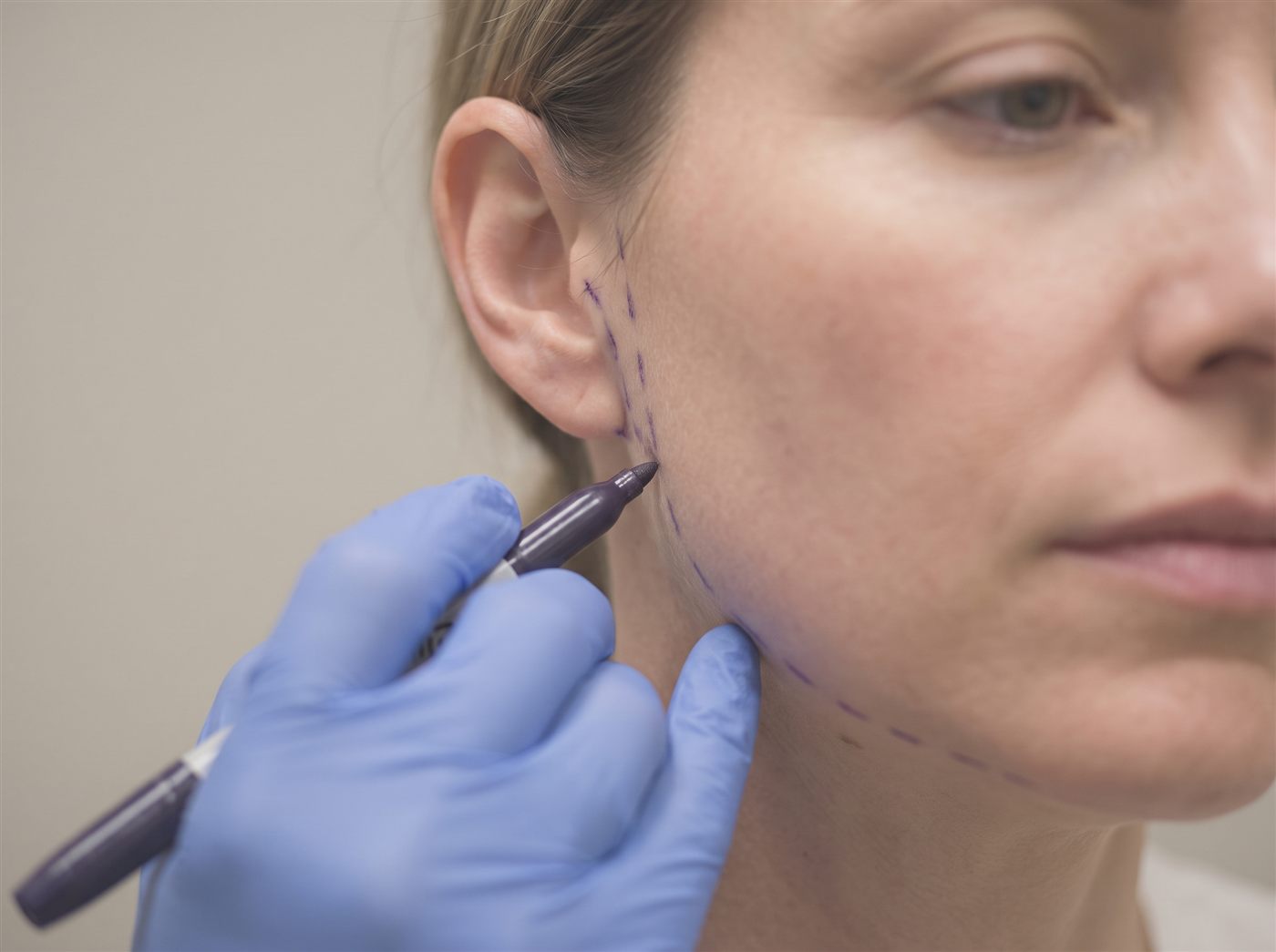
The face ages in layers. Skin is the most visible, but the tissues that shift first — and that produce the most significant change when addressed — sit deeper: the fat compartments, the ligaments that suspend them, and the SMAS, the fibromuscular sheet that underlies the lower half of the face and connects to the neck. When these structures descend, no amount of skin tightening restores them. The pull simply is not directed at the right level.
A deep plane facelift addresses this directly. The dissection goes beneath the SMAS layer to release the ligaments that tether the mid-face tissues. Once freed, the entire composite — muscle, fat, and skin moving as one unit — is repositioned along its natural anatomical vector, which runs diagonally upward rather than straight back toward the ear. The result is a change that the face recognises: the mid-face volume returns to where it was, the jowling resolves at its source, and the neck follows without separate traction on the skin.
At CFH, the surgeon who assesses your anatomy in the intake consultation is the same surgeon who plans the dissection, operates, and reviews your recovery at three, six, and twelve months. That continuity is not incidental. For a procedure of this scope, it is the only model that makes clinical sense.
Deep plane versus other facelift techniques
Patients often encounter several terms — SMAS lift, mini facelift, lower facelift, S-lift — before they understand how they differ. The distinction matters because the choice of technique should follow anatomy, not a preference list.
SMAS lift (standard): The dissection elevates a flap of skin and fat, then plicates or implicates the SMAS separately — folding or suturing it without releasing the deep ligaments. Effective for moderate laxity; the SMAS and skin move independently.
Deep plane: The SMAS is released at its attachments to the deep facial ligaments, so the composite moves as a unit. Better suited to more significant laxity, pronounced jowling, and descent of the mid-face. The dissection is more technically demanding and the recovery is somewhat longer.
Mini facelift / lower facelift: Shorter-scar techniques that address the lower third of the face only — jowl and early jawline softening — with limited dissection. Appropriate for early laxity in patients who are not yet candidates for a full deep plane approach.
Thread lift: A non-surgical option using absorbable sutures to lift surface tissue. Not a procedure CFH performs in this context — the results are shorter-lived and the scope of correction is different. Patients asking about thread lifts are generally asking about a different problem than those who need a facelift.
The intake conversation at CFH starts with your anatomy, not a menu. If a mini facelift would genuinely serve you better, the surgeon will say so. The plan you receive in writing is the surgeon's honest read of your specific face.
The face and neck together
The lower face and neck are anatomically continuous. The platysma — the muscle responsible for neck banding and softness — is a direct extension of the SMAS system that the deep plane dissection addresses. This is why deep plane facelifts commonly include a neck component, and why the combination produces a more coherent result than treating the two areas separately.
At CFH, if your anatomy warrants addressing the neck alongside the face, that is built into the surgical plan as a single operative logic, not two procedures. Submental liposuction, platysma plication, or a more extensive neck component can each be included where the anatomy calls for it. The plan you receive before committing to surgery will specify exactly what is proposed and why.
For patients whose primary concern is the neck alone — without significant mid-face descent — a submentoplasty or lower facelift is more likely to be the right recommendation. The surgeon will make this distinction at the intake stage.
Who is a good candidate
Deep plane facelift is most appropriate for patients with:
- Significant descent of the mid-face — the nasolabial folds deepen, the malar fat pad falls, and the cheek definition that was present in photographs from ten or fifteen years ago has softened
- Jowling along the jawline that is well established rather than early
- Neck laxity — banding, softening, or loss of the chin-to-neck angle — that accompanies the facial change
- Reasonable skin quality — the skin needs to have enough elasticity to redrape once the deeper tissues are repositioned
- A stable weight for at least three to six months
Deep plane facelift is also performed in men, and accounts for a meaningful proportion of CFH's facelift work. Male facial anatomy — thicker skin, heavier musculature, and different hair distribution around the ears — changes the planning and the incision design. The surgeon addresses this as a matter of anatomy, not as a specialist variant.
Patients who are earlier in the ageing process — with jowling just beginning and mid-face descent that is noticeable but not yet pronounced — may be better served by a less extensive approach. The intake assessment will determine this and the surgeon will give you an honest account of where you sit on that spectrum.
What the surgery involves
At CFH, deep plane facelift is performed under general anaesthesia and takes between five and six hours. The procedure is done at BHT Clinic, Istanbul — a JCI-accredited facility with on-site intensive care and anaesthesia cover around the clock.
The incisions begin in the temporal hair, continue in front of the ear following the natural crease, loop around the earlobe, and extend behind the ear into the posterior hairline. The exact pattern is adapted to your hair distribution and ear anatomy. A neck component typically adds a small incision beneath the chin.
The dissection proceeds beneath the SMAS layer, releasing the key ligaments that hold the mid-face structures in their descended position. Once released, the composite flap — SMAS, fat, and overlying skin — is repositioned as a unit. The skin closes without tension because the tension has already been borne by the deeper layers.
Dr. M. Aydın, who leads CFH's face and body practice, is the surgeon for deep plane facelift cases. The surgeon who conducts your intake is the surgeon at the operating table. The coordinator stays close on procedure day — the person who arranged your travel and hotel is the person in the corridor.
Recovery in plain terms
The first forty-eight to seventy-two hours involve swelling and bruising concentrated around the jaw, neck, and ears. Head elevation, cold application, and a compression garment are standard during this period. Most patients describe this phase as manageable rather than painful — discomfort is typically mild to moderate and addressed with oral analgesia.
By day seven, the majority of visible bruising has faded enough for most patients to move around comfortably without feeling self-conscious. Most patients return to light daily activity within ten days. Visible swelling — noticeable to the patient but generally not remarkable to others — persists for three to four weeks.
The final contour takes twelve months to settle fully. This is normal for a procedure working at the depth of the SMAS layer. The three-month review with Dr. Aydın is the first scheduled checkpoint for assessing progress; the six-month and twelve-month reviews follow.
Operative details at CFH:
- Duration: 5–6 hours
- Anaesthesia: general
- Recovery hotel: 7 nights
- Visible recovery: approximately 10 days
- Full settle: 12 months
- Price band: €8,800 – €11,200
What could be different from what you expect
A deep plane facelift addresses structural descent. It does not treat skin texture, pigmentation, fine lines, or volume loss in areas that sit above the plane of dissection — the lips, the periorbital area, or the forehead. Patients who expect a comprehensive surface improvement alongside structural repositioning will find that the face and neck are dramatically changed in some respects and unchanged in others. The surgeon will map this out at the planning stage so the distinction is clear before you commit.
For patients with significant skin laxity but relatively little mid-face descent, a deep plane approach may produce less visible change than expected in the mid-face while delivering good results at the jawline and neck. Anatomy does not always map neatly onto the outcome that looks most compelling in other people's photographs. The intake assessment exists to close that gap.
Swelling after a deep plane facelift is more prolonged than after a mini or lower facelift. Patients who need to look unremarkable for a social or professional event within six weeks of surgery are not good candidates for the timing, regardless of how good the eventual result will be.
The surgeon's job at intake is to give you an honest account of what your specific anatomy will produce — and to tell you if a different procedure, a combined approach, or a different timeline would serve you better.
How CFH plans a deep plane facelift
The intake is a thirty-minute call in your language. No surgical menu is presented. The surgeon listens for what you have noticed — the jaw, the neck, the mid-face — and then reviews your photographs.
Within 48 hours, your matched surgeon signs a written plan that describes the proposed technique, the anatomy that drives it, what the procedure is expected to address, and what it will not change. That plan is yours to read, to question, and to take a second opinion on before you commit.
The surgical fee includes the procedure, general anaesthesia, seven nights at the recovery hotel, and the full post-operative review schedule through twelve months. Consultation carries no fee.
CFH has been in continuous practice since 1994. The facility — BHT Clinic, Istanbul — holds JCI accreditation facility-wide and TEMOS certification for international patient care. Intake is available in eight languages: English, Romanian, Italian, Spanish, French, Albanian, Arabic, and Farsi.
Frequently asked questions
What is a deep plane facelift and how does it differ from a standard facelift?
A deep plane facelift releases the ligaments that hold the mid-face tissues in their descended position, then repositions the SMAS layer, the fat compartments, and the skin as a single unit. A standard SMAS facelift tightens the SMAS separately, without releasing these ligaments. The deep plane approach is better suited to patients with pronounced mid-face descent and jowling because it repositions the tissues rather than just tightening a surface layer over them. The surgery is longer and the recovery is somewhat more involved, but the structural change is more comprehensive.
How long is recovery from a deep plane facelift?
Most patients are comfortable moving around in public within ten days of surgery. Visible bruising resolves over one to two weeks. Residual swelling — detectable to the patient but not obvious to others — can persist for three to six weeks. The full result takes twelve months to settle, because the tissues repositioned at this depth continue to soften and integrate over time. The three-month review is the first scheduled check on progress.
Is a deep plane facelift suitable for men?
Yes. Male facial anatomy requires specific adaptations in planning — thicker skin, different muscle bulk, and incision design that accounts for beard distribution and hairline position. These are surgical decisions, not variations in technique, and they are addressed in the pre-operative plan. Men account for a meaningful portion of facelift work at CFH.
Will I always see the same surgeon?
Yes. The surgeon who conducts your intake assessment signs your plan, performs the procedure, and conducts the three-month, six-month, and twelve-month video reviews. There is no handover to a junior at any stage. This is the only model CFH operates.
How much does a deep plane facelift cost in Istanbul?
The indicative price band at CFH is €8,800 – €11,200. This includes the procedure, general anaesthesia, seven recovery hotel nights, and the full post-operative review programme through twelve months. The written plan you receive before committing to surgery specifies exactly what is included. Consultation carries no fee.
Does a deep plane facelift include the neck?
Frequently, yes. The SMAS system addressed in a deep plane facelift connects directly to the platysma in the neck, so neck work — submental liposuction, platysma tightening, or a more extensive neck component — is commonly planned at the same time. Whether the neck is included, and what form that takes, depends on your anatomy and is specified in the pre-operative plan.
Can a deep plane facelift be combined with other procedures?
Yes. Blepharoplasty (eyelid correction) is commonly planned alongside a facelift when the upper or lower lids are a separate concern. Chin augmentation is sometimes included when a recessed chin is contributing to the appearance of jowling or a heavy neck. When procedures are combined, they are planned as a single surgical logic, with recovery sequenced accordingly. The surgeon will advise on what is and is not appropriate to combine in one operative session based on your specific anatomy and the overall plan.
What languages do you operate in at CFH?
Intake, pre-operative planning, the after-care card, and post-operative reviews are available in English, Romanian, Italian, Spanish, French, Albanian, Arabic, and Farsi. Arabic and Farsi are served right-to-left. You do not need to speak Turkish at any stage of the process.