Chin Augmentation
Chin implant or genioplasty in Turkey at CFH Istanbul: surgeon-led from plan to twelve-month review. JCI + TEMOS accredited. Enquire for a written plan.
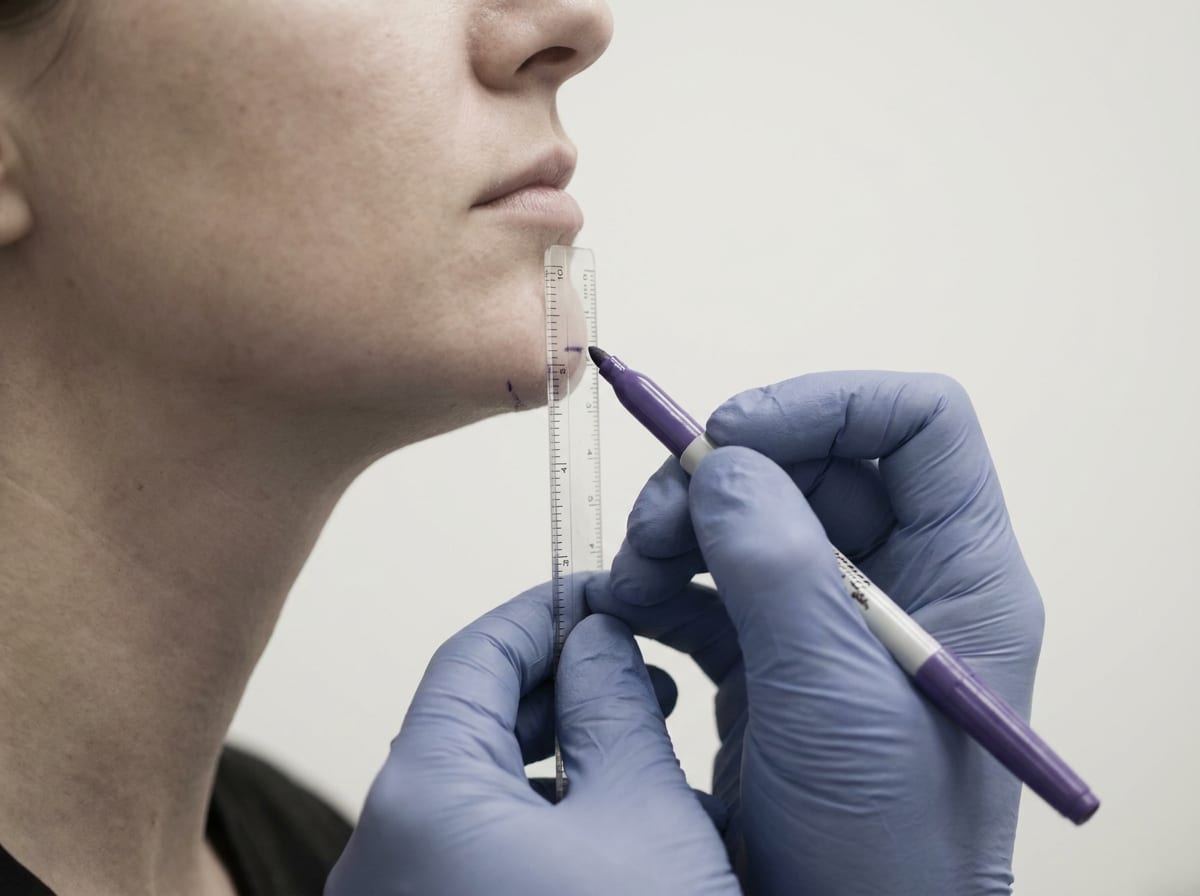
Most people searching for chin augmentation in Turkey are not looking for the cheapest option. They are looking for the right surgeon and a clear picture of what the procedure involves — from the initial plan through to recovery at home.
At CFH, chin augmentation sits within our face pillar: surgeon-led facial balance work, planned against your full facial anatomy rather than the chin in isolation.
Two Approaches: Implant vs. Genioplasty
Chin augmentation covers two distinct surgical routes, and the right one depends on your anatomy and what you are trying to achieve.
Chin implant (mentoplasty)
A solid silicone implant placed through a small incision under the chin or inside the lower lip. The implant sits on the bone and is held in place by the surrounding tissue. It adds projection and, depending on the shape selected, can also address vertical or lateral definition. The procedure runs between one and a half to two and a half hours under general anaesthesia.
Sliding genioplasty
Genioplasty repositions the chin bone itself — cut, moved, and fixed with small titanium plates. It is a more involved operation, but it gives the surgeon precise three-dimensional control: projection, height, and midline alignment in a single procedure. For patients whose chin needs to move in more than one plane, or whose bite relationship is already under review, genioplasty is often the more appropriate route.
At CFH, the approach is selected during the planning consultation, not at the operating table.
How This Procedure Is Planned at CFH
Chin augmentation is rarely planned in isolation. Projection in profile depends on the relationship between the chin, the lips, and the nose. If you are combining chin work with rhinoplasty — a common combination — the chin projection target is set as part of the rhinoplasty plan, not as a separate afterthought.
Your surgeon will review:
- Lateral and frontal photographs
- The naso-labial and mentocervical angles
- Your facial thirds proportion
- Whether a submentoplasty (to address soft tissue under the chin) would complement the result
The written plan you receive before any commitment describes the approach selected and the rationale for it.
What the Surgery Involves
Duration: One and a half to two and a half hours.
Anaesthesia: General anaesthesia at a JCI-accredited theatre.
Incision: Either a small external incision along the natural crease under the chin (virtually invisible once healed) or an internal incision along the lower gum line. Genioplasty is performed through the same intraoral approach in most cases.
Recovery hotel nights: Five nights is the standard stay.
Visible recovery: Ten days. Swelling and some stiffness around the lower jaw are normal in the first week. Most patients can eat soft foods from day two.
Full settlement: The final position and feel of the chin — particularly the soft tissue drape over an implant — settles over approximately nine months. At the one-month mark, the result is visible but not final.
The Surgeon Who Plans Is the Surgeon Who Operates
At CFH, the same surgeon who reviews your photographs, signs your plan, and answers your questions before travel is the surgeon at the operating table — and the surgeon you speak to at the three-month and twelve-month video reviews.
This is not a secondary point. Chin augmentation requires precise intraoperative decisions: implant pocket depth, implant positioning relative to the mental nerve, and soft tissue tension over the implant. Those decisions are safer — and more consistent with the plan you agreed to — when the operating surgeon is the one who designed the plan.
Combining Chin Augmentation with Other Procedures
Chin augmentation is frequently performed in combination with other face procedures at CFH. Common combinations include:
- Chin augmentation with rhinoplasty: The most common combination. The nose and chin are planned together so that the profile reads as a balanced whole rather than two separately-corrected features.
- Chin augmentation with submentoplasty: Where soft tissue under the chin also needs addressing, a submentoplasty (targeted liposuction and platysma tightening) is often sequenced in the same operating session.
- Chin augmentation with lower blepharoplasty or facelift: For patients addressing several areas of the face, the chin procedure is incorporated into the session plan.
Combined sessions are planned around genuine recovery logistics. Your surgeon will tell you which combinations are practical within a single anaesthetic and which are better separated.
Candidacy: Who This Procedure Is Appropriate For
Chin augmentation is appropriate for adults with a well-established facial skeleton whose chin lacks projection, height, or definition relative to the rest of the face. Typical presentations include:
- Chin retrusion visible in lateral profile (the chin sits behind a vertical line dropped from the lips)
- Disproportionate lower facial third
- A jawline that lacks definition when viewed from the front
It is not an appropriate procedure for patients who are still growing, patients with significant bite discrepancies that need orthognathic input, or patients seeking micro-adjustments that non-surgical options could address.
If implant-based augmentation has been performed elsewhere and the position or feel is not right, revision is possible. The planning approach is the same: photographs, assessment, written plan before any commitment.
What Could Be Different From Your Expectations
Some honest context that clinic marketing rarely includes:
Swelling takes longer than most patients expect. The chin has significant soft tissue investment. At ten days you will look like the procedure happened. At three months you will have a strong sense of the result. At nine months the final position is confirmed. Planning your social calendar around the three-month mark rather than the two-week mark is sensible.
Implants are palpable. A chin implant can be felt if you press on the chin. This is normal. It does not mean it has moved. It is not visible to anyone who is not pressing.
The profile reads differently in photographs than in life. The change in chin projection affects how the whole lower face photographs. Some patients find the photograph reads more strongly than they expected. This is not a sizing error — it is the nature of the proportion shift.
Genioplasty recovery is longer. If your anatomy warrants genioplasty rather than an implant, recovery involves more jaw stiffness and a longer dietary adjustment. The result is more durable and more adjustable in three dimensions, but the first two weeks require more planning.
The International Patient Journey at CFH
For patients travelling from the UK, Ireland, or further afield, the logistics are handled as part of the service:
- Before travel: Intake call in your language. Photographs uploaded from your phone. Surgeon signs a written plan within 48 hours. No fee to consult, no obligation to proceed.
- On arrival: Airport transfer to the recovery hotel. Pre-operative bloods and anaesthesia review at the hotel — no clinic shuttle needed.
- Surgery day: JCI-accredited theatre at BHT Clinic, Istanbul. The named surgeon operates. Your coordinator stays available throughout the day.
- Recovery stay: Five nights at the recovery hotel. The surgeon reviews you before you fly.
- After you leave: Video reviews at month three, six, and twelve. Your coordinator answers messages between reviews. If the surgeon needs to see something on camera, the call is arranged the same day.
CFH operates in eight languages — English, Romanian, Italian, Spanish, French, Albanian, Arabic, and Farsi — so the written plan and after-care instructions are in the language you read best.
Frequently Asked Questions
Is a chin implant or genioplasty more common at CFH?
Both are performed regularly. The approach is determined by your anatomy and your goals, not by a preference for one technique. Your surgeon will explain the rationale for the recommendation in the written plan.
How visible is the scar?
For implant placement via an external incision, the scar sits in the natural crease under the chin and is not visible from the front or three-quarter view. For intraoral incisions (used in genioplasty and in some implant cases), there is no external scar at all.
Can a chin implant be removed or replaced later?
Yes. Implants can be removed or exchanged. If you gain or lose significant weight, or if your preference changes over time, the implant can be revisited. This is discussed at the planning stage so you understand the procedure as a durable but not permanent decision.
Will chin augmentation change how my jaw looks from the front?
Projection-focused implants primarily affect the lateral profile. Implants with a lateral wing — designed to improve jawline definition when viewed from the front — are also available and are used where the front-view anatomy warrants it. This is part of the planning discussion.
What is the difference between chin augmentation and submentoplasty?
Chin augmentation adds structure to the chin itself (projection, definition). Submentoplasty addresses the soft tissue beneath the chin — fat and muscle — without changing the bone or adding an implant. The two procedures complement each other in some cases and can be performed together.
How long should I plan to be in Istanbul?
Five recovery hotel nights following surgery, plus arrival day. Most patients fly home on day six or seven post-surgery. The pre-operative assessment is handled remotely, so no additional pre-travel clinic visit is needed.
Is the consultation free?
Yes. There is no charge to submit photographs and receive a written plan from your matched surgeon. The plan will describe the recommended approach, the rationale, and what the procedure involves for your specific anatomy.