Gynecomastia
Surgeon-led gynecomastia correction at CFH Istanbul. Glandular excision with VASER liposuction, general anaesthesia, one named surgeon from consultation through your twelve-month review. JCI + TEMOS accredited.
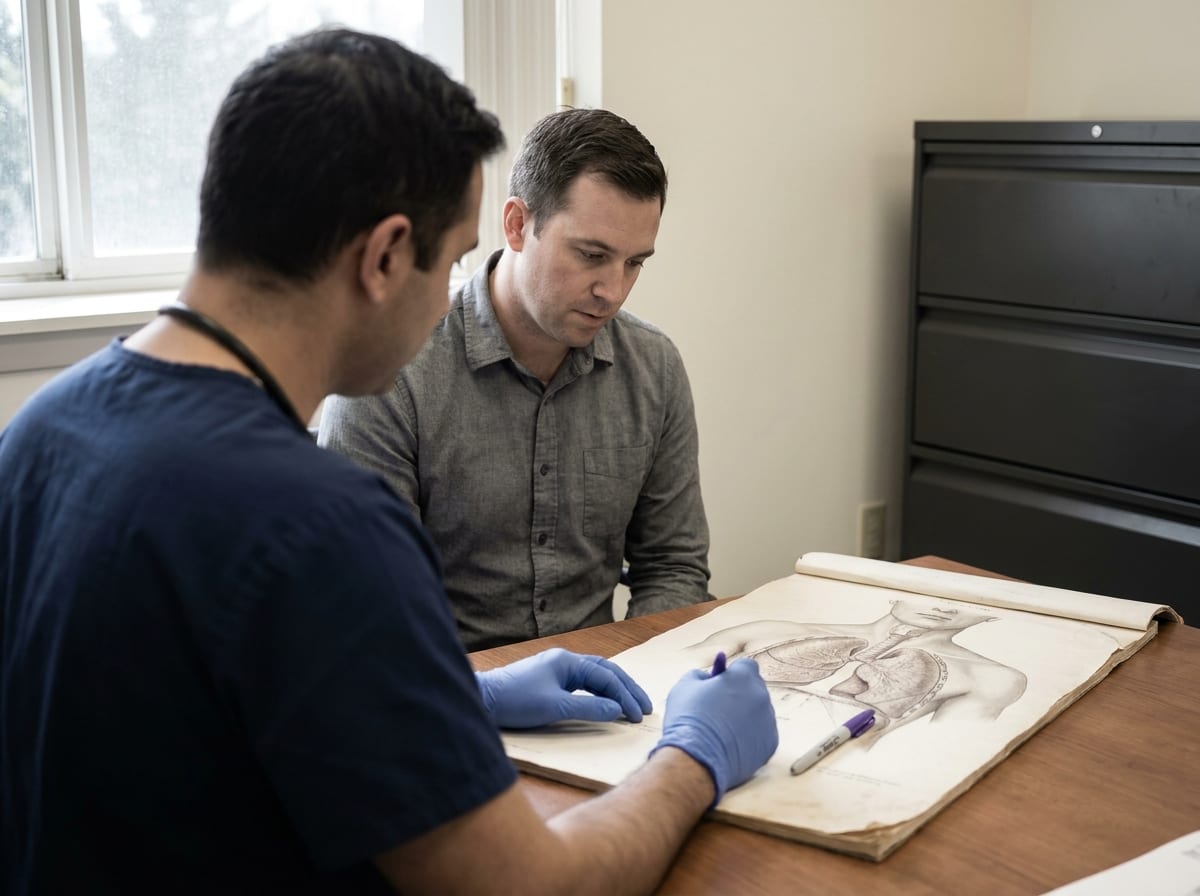
Most men who search "gynecomastia surgery" have already spent months deciding whether to do anything at all. The tissue is there, it doesn't respond to diet or training, and the question has shifted from whether to how — and specifically, who will be accountable for the whole process.
At CFH, the answer to that question is one named surgeon. The same person who takes your first consultation is the surgeon who operates, reviews your scars at six weeks, and closes your case at twelve months. That continuity is the structure — not a marketing line.
What Gynecomastia Surgery Involves
True gynecomastia is glandular tissue seated beneath the nipple-areola complex. It doesn't respond to exercise or caloric deficit because it isn't fatty tissue — it's ductal and stromal. The surgical solution is precise excision of that glandular disc, usually combined with VASER-assisted liposuction of the surrounding chest area to sculpt the contour.
At CFH the procedure runs under general anaesthesia and takes two to three hours. The two techniques work together: liposuction addresses the broader chest shape; excision removes the firm core of tissue that liposuction alone cannot reach.
Most men stay in Istanbul for five nights. Local swelling settles progressively over the following weeks; the final chest contour takes around nine months to stabilise fully. Your surgeon will tell you, clearly, at what point in that arc each review lands.
Am I a Candidate?
Candidacy for gynecomastia surgery depends on tissue type, degree, and a few health baselines. The questions your surgeon will work through:
- Is it glandular or pseudo-gynecomastia? Pseudo-gynecomastia is fatty tissue, not glandular, and behaves differently under surgery. The distinction matters for planning and for honest expectation-setting.
- Is there an underlying hormonal cause? Medications (anabolic steroids, some antidepressants, anti-androgens), weight change, or hormonal shifts can cause breast tissue to develop. Where a reversible cause is still active, your surgeon will discuss timing.
- Is your weight stable? Significant weight fluctuation after surgery can affect long-term chest shape. Your surgeon will be direct about this at intake.
- Are your expectations calibrated? Gynecomastia surgery reshapes the chest and removes the glandular tissue. It does not guarantee a specific aesthetic outcome, and it requires patience — the nine-month settle is real.
If you're uncertain which category applies to you, the intake call at CFH is the right place to find out. No fee to consult.
Scarring After Gynecomastia Surgery
Scarring is one of the most-searched questions around this procedure, and it deserves a direct answer rather than reassurance.
The standard incision sits along the lower edge of the areola — a semicircular line that follows the natural colour boundary of the skin. In most cases this heals into a fine, flat line that becomes difficult to see at the twelve-month mark. The VASER liposuction accesses the chest through very small port sites that typically leave minimal visible marks.
What actually determines how your scars heal: the quality of the closure, the post-operative care protocol your surgeon prescribes, and your own healing biology. At CFH, the same surgeon who planned your incision is the surgeon reviewing the scar at six weeks and again at twelve months. If something needs adjusting in the protocol, it happens within the same relationship — not with a stranger.
There is no surgery that produces no scar. Anyone who tells you otherwise is not being honest with you.
Can Gynecomastia Come Back After Surgery?
If the glandular tissue is excised completely, true recurrence of gynecomastia is uncommon. The tissue that was removed cannot regrow.
What can happen: if the underlying hormonal driver — a medication, a hormonal condition, or ongoing steroid use — continues after surgery, new glandular tissue can develop. This is not a surgical failure; it is the original cause reasserting itself.
Your surgeon will walk through this directly at the planning stage. The plan your surgeon signs will note any relevant factors and what they mean for long-term outcome. That document is yours to keep.
Why Istanbul — and Why Surgeon-Led Continuity Matters Specifically Here
International patients choosing Istanbul for gynecomastia surgery are making a sensible economic decision. The cost of surgeon-led care at a JCI-accredited facility in Istanbul reflects a different healthcare economy, not a compromise on the quality of what happens in the operating room.
What international patients should scrutinise is continuity. In markets where surgical tourism operates at volume, the pattern is often: a named surgeon for the consult, a different operative team, and a local GP left to manage the recovery. For most procedures, this is tolerable. For gynecomastia — where the final chest shape takes nine months to settle and where scar management genuinely benefits from consistent follow-up — it matters more.
At CFH the continuity is the proposition. The surgeon who assesses your anatomy signs the operative plan. The same surgeon operates. The same surgeon reviews you at six weeks and twelve months via video consultation. The coordinator who manages your Istanbul stay speaks your language and stays in contact through recovery.
CFH has operated from Istanbul within the Bahat Medical Group since 1994. The facility holds JCI and TEMOS accreditation. Intake is available in English, Romanian, Italian, Spanish, French, Albanian, Arabic, and Farsi.
What the Process Looks Like
Intake call — A 30-minute conversation to understand your history, your tissue type as you describe it, and what you're hoping to resolve. We listen for the specifics, not a generic surgical menu.
Surgeon match and plan — Within 48 hours, you're introduced to the named surgeon who will carry your case. For body work, that is typically Dr. N. Özdemir, who works exclusively in body contouring. The surgeon reviews your photographs and signs a written plan.
Pre-operative preparation — Blood work and any relevant imaging happen either before you travel or on arrival in Istanbul. Your coordinator manages the logistics.
Procedure — General anaesthesia, JCI-accredited theatre, glandular excision and VASER liposuction. Two to three hours. The surgeon you met is the surgeon operating.
Istanbul recovery stay — Five nights. Your surgeon sees you at least once post-operatively before you fly. Discharge instructions are written, not just spoken.
Remote follow-up — Six-week scar review and twelve-month close-out review by video, with the same surgeon. The coordinator joins every call so nothing is lost in translation.
Frequently Asked Questions
Can gynecomastia go away without surgery?
Some cases resolve on their own — particularly adolescent gynecomastia, where the tissue often regresses within two years of onset. If the tissue has been present for more than two to three years in an adult, spontaneous resolution is unlikely.
Options promoted online as non-surgical — compression garments, dietary adjustments, supplements — address the appearance of chest volume in some pseudo-gynecomastia cases (fatty tissue, not glandular). They do not remove glandular tissue. If you have firm, tender tissue directly behind the nipple, surgery is the only way to address it.
We'll tell you honestly at the intake call which category your case falls into, and whether surgery is the right answer for you specifically.
How much does gynecomastia surgery cost in Turkey?
The cost of gynecomastia surgery in Istanbul is shaped by the extent of the procedure — how much glandular tissue is present, whether significant liposuction is required, and the duration of your stay. Because at CFH the same surgeon carries your case from intake through a twelve-month review, the fee structure reflects an ongoing relationship, not a single operating-room transaction.
The intake call is the right place to understand what your specific anatomy requires and what the full cost of your programme at CFH would be.
Is gynecomastia surgery covered by insurance?
In most markets, gynecomastia surgery is classified as an aesthetic procedure and is not covered by standard health insurance. Some policies cover the procedure where a hormonal or medical cause is documented and the condition causes significant physical symptoms — but this varies considerably by insurer and jurisdiction. The intake call can help you understand what documentation would be relevant if you intend to make a claim.
What is the recovery like after gynecomastia surgery?
Most patients feel well enough to move comfortably within a few days of surgery. The first week involves some swelling and tenderness across the chest; most men with desk-based work return to it within seven days. Physical activity follows a graduated timeline — your surgeon will give you specific guidance for your case. The compression garment worn in the first weeks is part of the scar and contour protocol, not optional.
The chest continues to change shape for up to nine months as swelling fully resolves. The twelve-month review is the point at which your surgeon can give a considered assessment of the final result.
Will there be visible scarring?
The incision sites are designed to fall within the natural anatomy of the areola border and in very small liposuction port positions. Most patients find the scars become difficult to see at the twelve-month mark. Healing is individual, and your surgeon will be direct with you about what to expect based on your skin type and tissue. Scar management is part of the follow-up protocol, not an afterthought.
How do I know which surgeon will perform my procedure?
At CFH, you are named a specific surgeon before any plan is signed. For gynecomastia — a body contouring procedure — the surgeon carrying your case specialises in body work. You will have spoken with that surgeon, read their plan, and had the opportunity to ask questions before any commitment is made. The same surgeon operates. This is not the standard model in high-volume surgical tourism, and it is the reason CFH is structured the way it is.
Begin a consultation
One surgeon, from the first conversation to the twelve-month review. Tell us what you are considering — we will tell you honestly what is possible.