Breast Augmentation
Surgeon-led breast augmentation at CFH Istanbul. Implant or fat transfer, pocket and projection matched to your frame by one named surgeon — intake to twelve-month review. JCI + TEMOS accredited.
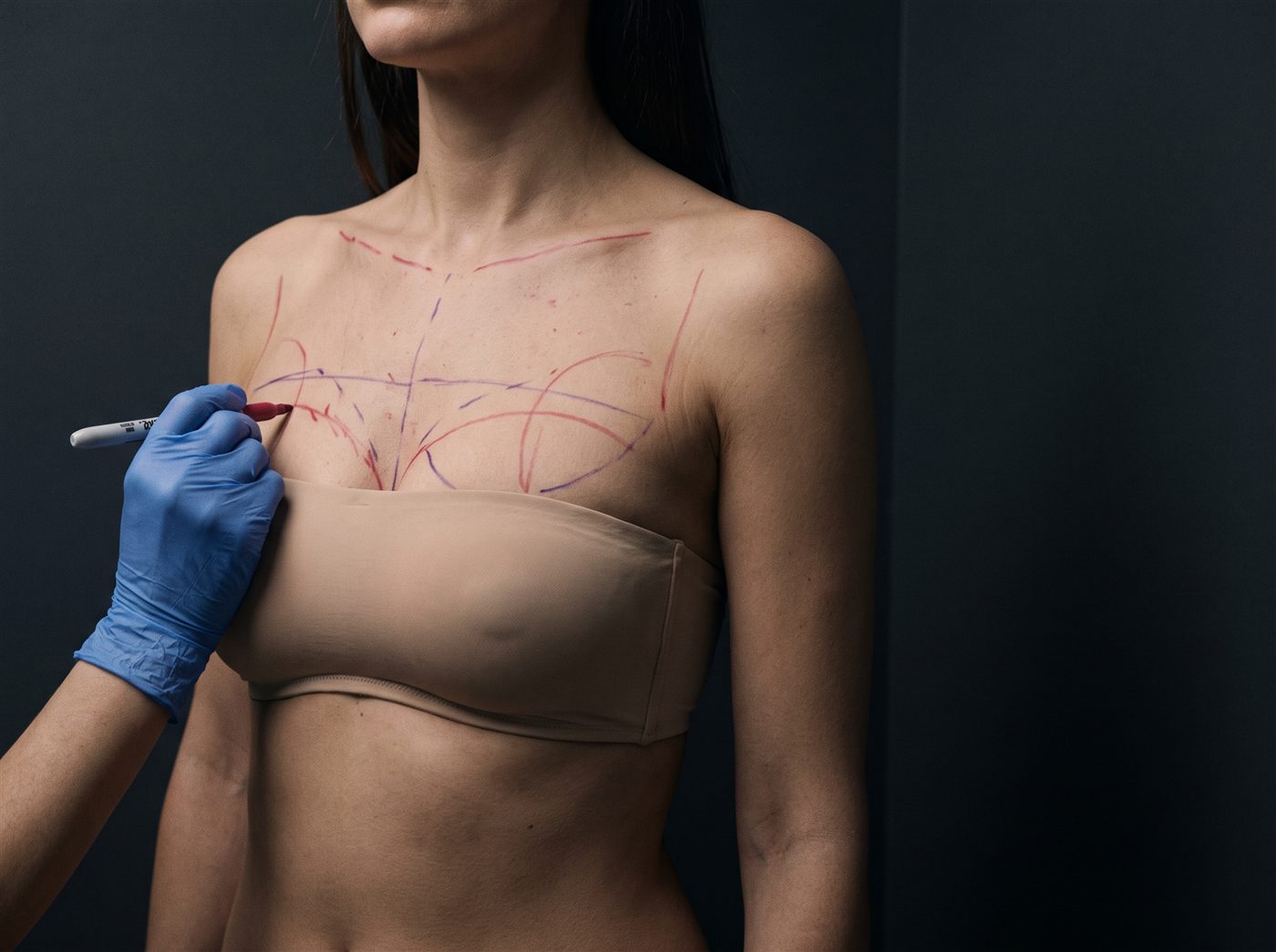
Breast augmentation is one of the most searched aesthetic procedures for patients travelling to Turkey — and also one of the most variable in how well the outcome is planned and followed. The range between a thoughtful surgical plan and a transactional one is wide. The difference is usually not in the implant itself; it is in whether the surgeon who evaluates your frame is the same surgeon who designs the pocket, performs the procedure, and reviews the result at month nine.
At CFH, that continuity is the foundation of the service. The surgeon who hears your intention in the intake call signs the plan, performs the procedure, and conducts every post-operative review through twelve months. There is no delegation at any stage.
What breast augmentation involves
Breast augmentation at CFH can be achieved through one of two approaches — implant-based augmentation or autologous fat transfer — and the choice between them is determined by your anatomy, your goals, and an honest conversation about what each method can and cannot do.
Implant-based augmentation
An implant is placed behind the breast tissue or the pectoral muscle, depending on the amount of natural tissue coverage available and the projection being planned. The surgeon's decision on pocket placement — subglandular (behind the gland), submuscular (behind the pectoral muscle), or dual-plane (a split between both) — depends on your anatomy and the profile being planned, not on a default setting.
Implant selection at CFH covers shape (round or anatomical), surface, and projection. The projection and size are planned against your existing chest width and tissue coverage — not against a wish list in isolation. A projection that looks proportionate at three months is the target, not a size that reads as dramatic in the first week.
Implants are not lifetime devices. Most last many years without issue, but replacement may become necessary over time, either because of implant changes or because of natural tissue changes that alter how the result sits. The surgeon will address this plainly during planning.
Fat transfer breast augmentation
Autologous fat transfer uses liposuction to harvest fat from a donor area — typically the abdomen, flanks, or thighs — and places the processed fat into the breast. It is the appropriate route when the goal is a modest increase in volume with no implant, when the patient has suitable donor fat, and when the frame will support the result without bottoming out.
Fat transfer does not achieve the same volume increase as implants and carries a different set of considerations: a portion of transferred fat is naturally reabsorbed in the months after surgery, and the final volume settles over six to nine months rather than being immediately apparent. The liposuction harvest is a procedure in its own right, adding to the operative time and the recovery footprint.
The intake at CFH will determine which approach — implant, fat transfer, or a combination — suits your anatomy and your goals. Both are available. Neither is presented as universally better.
Operative details at CFH
- Duration: 2–3 hours
- Anaesthesia: General
- Recovery hotel: 7 nights
- Visible recovery: approximately 10 days
- Full settle: 9 months
- Price band: €5,200 – €7,800
The price band covers the procedure, general anaesthesia, seven nights at the recovery hotel, and the full post-operative review schedule through twelve months. The written plan you receive before committing specifies exactly what is included. There is no fee to consult.
Who is a good candidate
Breast augmentation — whether implant-based or via fat transfer — is most straightforward for patients who:
- Have breasts that are proportionally smaller than they would like relative to their frame, without significant ptosis (drooping)
- Are at a stable weight and not planning significant weight changes in the near term, as weight change affects how the result sits
- Have realistic expectations about the degree of change the surgery can achieve — augmentation changes volume and projection, it does not lift
- For fat transfer specifically: have sufficient donor fat at the harvest site and are seeking a modest rather than dramatic volume increase
If you have a degree of breast drooping in addition to volume concerns, the surgeon will assess whether augmentation alone addresses the shape, or whether a breast lift (mastopexy) in combination with augmentation would better serve your anatomy. These two procedures can be combined in a single operative session; the planning is explicit and involves the same surgeon throughout.
Patients who search for breast augmentation in Turkey often ask about recovery time, scarring, implant longevity, and what the result looks like in the months after surgery rather than in the first week. These are the right questions, and the CFH intake is designed to answer them before a plan is signed.
Recovery in plain terms
The first days after breast augmentation are more physically limiting than many patients anticipate, particularly with implant placement under the pectoral muscle, which involves the chest wall in the recovery process.
The standard recovery arc at CFH:
- Days 1–3: Recovery at the hotel. The surgical bra or supportive garment is worn continuously. Arm movement is restricted — particularly overhead reaching — to protect the pocket while initial healing progresses. Pain is well-controlled with prescribed medication. The coordinator or surgeon checks in within the first 24 hours.
- Days 4–7: Most patients are moving more comfortably and are able to manage day-to-day activities without assistance. The incision sites are reviewed before discharge. The supportive garment continues.
- Weeks 2–4: Return to desk work and light activity for most patients. Strenuous arm and chest exercise is not appropriate during this period. The garment continues.
- Months 2–3: Most social and professional activity has resumed. Implants, if used, are still settling into the pocket — the final position and softness of the result is not yet established at this stage.
- Months 6–9: The settle point. Implants have dropped into their final position. The capsule around the implant has formed and softened. Fat-transfer results are stable. The surgeon conducts the review that assesses the final outcome.
- Month 12: Close-out review. The surgeon sends the summary note to your GP.
What could be different from what you expect
Breast augmentation is a well-understood procedure, but the gap between what patients expect and what the first three months actually involves is the most consistent source of avoidable anxiety. A few honest points:
The first week is more restrictive than most people expect. Arm movement limitations, sleeping on your back, and the weight and pressure of the garment are real physical impositions. Patients who arrive prepared for this find the first week manageable; those expecting to feel normal within a few days do not.
The result at week two does not reflect the result at month nine. Implants sit high and firm immediately after surgery. They soften and settle over months. The result that reads as "done" to your surgeon at the twelve-month review looked quite different at the two-week check. Patients who compare their early result to a clinical photograph taken at a year — their own or anyone else's — are comparing the wrong time points.
Implants are not permanent. The surgeon will tell you this during planning. It is important to hear it before surgery rather than encounter it as a surprise years later. The timeline for any intervention varies considerably between patients and depends on factors that cannot be predicted in advance.
Fat transfer results involve a variable absorption rate. After fat transfer, a portion of the transferred volume is naturally reabsorbed by the body over the following months. The final volume at nine months is less than what was transferred. This is known and planned for — the surgeon accounts for it in the volume transferred — but it means the result at week one is not a reliable indicator of the final outcome.
Combining augmentation with a lift extends the recovery and the scar footprint. If your anatomy requires both a volume increase and a positional correction (lift), the combined procedure is more involved than augmentation alone. The planning conversation will cover what the combined scar pattern looks like and what the recovery involves before any commitment is made.
How CFH plans a breast augmentation
The intake is a 30-minute call in your language. You describe what you want to address — no surgical menu is presented. Within 48 hours, the matched surgeon signs a written plan that specifies the approach (implant type and pocket, or fat transfer), what is achievable for your specific anatomy, and how recovery is expected to progress. That plan is yours before anything is committed.
On procedure day, the surgeon who wrote that plan is at the table. Dr. N. Özdemir leads body contouring at CFH, with sixteen years in aesthetic plastic surgery. The coordinator who arranged your travel is available throughout your stay and for the twelve months of follow-up that follow.
CFH has been in continuous practice since 1994. The facility — BHT Clinic, Istanbul — holds JCI accreditation and TEMOS certification for international patient care. Intake is available in eight languages: English, Romanian, Italian, Spanish, French, Albanian, Arabic, and Farsi.
Frequently asked questions
What does breast augmentation in Turkey cost at CFH?
The price band at CFH for breast augmentation is €5,200 – €7,800. This covers the procedure, general anaesthesia, seven nights at the recovery hotel, and the full post-operative review schedule through twelve months. The written plan you receive before committing specifies exactly what is included. There is no fee to consult.
What is the difference between implant augmentation and fat transfer to the breast?
Implant-based augmentation achieves a more predictable and larger volume increase and is suitable for a wider range of patients. Fat transfer uses your own tissue, involves no implant, and suits patients seeking a modest increase with available donor fat — but it involves a liposuction harvest step, carries some natural volume reabsorption in the months after surgery, and cannot achieve the same degree of change as an implant. The intake will assess which approach, or which combination, is right for your anatomy and goals.
Will I see the same surgeon at every stage?
Yes. The surgeon who hears your intake, signs the plan, performs the procedure, and conducts all post-operative reviews — at three, six, nine, and twelve months — is the same person at every stage. At CFH this is the only model in operation. There is no delegation to a junior at any point.
How long does recovery from breast augmentation take?
Most patients are comfortable for daily activities within ten days and return to desk work in two to three weeks. Strenuous activity and exercise resume at six to eight weeks. The full result — implants settled, capsule softened, or fat transfer volume stable — is assessed at the nine-month review, not in the first few weeks.
Can I fly home after surgery?
Yes. CFH schedules seven recovery hotel nights to allow the incision to be reviewed and the initial healing to be assessed before departure. Most patients fly home on day seven to ten. The surgeon will discuss travel timing and any precautions appropriate to your situation before you leave Istanbul.
What does the result look like in the first few weeks versus later?
In the weeks immediately after surgery, implants typically sit higher and firmer than their final position. The pocket gradually relaxes and the implant settles downward over the following months. At three months, the result is closer to its final form; at nine months, it is typically stable. Fat transfer results follow a similar arc — the final volume is lower than the immediate post-operative volume as natural reabsorption occurs. The surgeon's scheduled reviews are designed to track and contextualise this arc at each stage.
Can breast augmentation be combined with other procedures?
Yes. Augmentation is commonly combined with a breast lift (mastopexy) when there is both volume loss and positional change to address. It can also be incorporated into a combined body procedure when the patient's anatomy and recovery capacity permit. Combined procedures are planned as a single surgical logic under one surgeon — the sequencing and extent decided based on your anatomy, not as a list of add-ons.
Do I need to speak Turkish to be treated at CFH?
No. Intake, surgical planning, and all post-operative communication are conducted in your language. CFH operates in eight languages: English, Romanian, Italian, Spanish, French, Albanian, Arabic, and Farsi. The written plan, after-care instructions, and close-out note sent to your GP are provided in your language.
Begin a consultation
One surgeon, from the first conversation to the twelve-month review. Tell us what you are considering — we will tell you honestly what is possible.