Cheek Augmentation
Cheek augmentation at CFH Istanbul: implant or facial fat transfer, surgeon-led from plan to twelve-month review. JCI + TEMOS accredited. Enquire for a written plan.
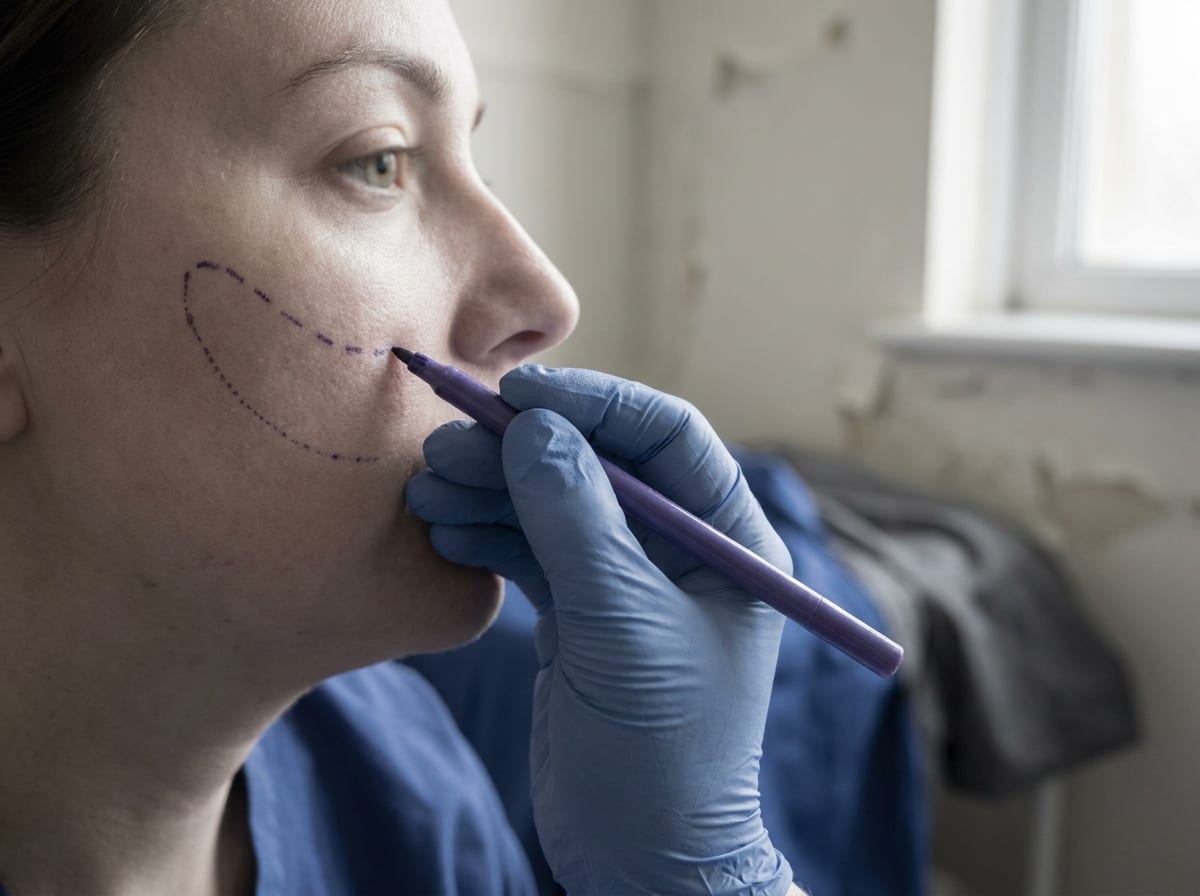
Most people searching for cheek augmentation or facial fat transfer in Turkey are not looking for the cheapest route. They are looking for a surgeon who understands mid-face anatomy and a process that makes the result predictable — from the initial consultation through to the final settled outcome.
At CFH, cheek augmentation sits within our face pillar: surgeon-led mid-face work, planned against your full facial anatomy rather than the cheekbones in isolation.
Two Approaches: Implant or Autologous Fat Transfer
Cheek augmentation covers two distinct surgical routes. The right one depends on your anatomy, the volume deficit you are addressing, and what you want the result to feel like long-term.
Cheek implant
A solid silicone implant placed through a small incision inside the upper lip, positioned on the cheekbone and held in place by the surrounding tissue. Implants add projection, width, or height to the mid-face — or a combination of all three depending on the shape selected. The procedure typically runs between one and a half and two hours under general anaesthesia.
Implants are a good option when the volume deficit is structural: the cheekbone itself is flat or recessed relative to the rest of the face. The result is durable and consistent because it rests on bone.
Facial fat transfer (autologous fat grafting)
Fat is harvested from a donor site on the body — typically the abdomen or inner thigh — processed, and reinjected into the mid-face and cheeks in precise layers. Fat transfer adds volume without a foreign implant and can be distributed across a wider area than a fixed implant allows.
The tradeoff is that some of the transferred fat is reabsorbed in the months following surgery. The degree of take varies between individuals. By the nine-month mark, the surviving fat has integrated permanently. Patients considering fat transfer are counselled on this at the planning stage so that the final volume target accounts for expected resorption.
At CFH, the approach is selected during the planning consultation, not at the operating table.
How This Procedure Is Planned at CFH
Cheek augmentation is rarely planned as a standalone feature. The mid-face sits between the eyes, the nose, and the mouth. A change in cheek projection and volume shifts how the whole face reads — in profile, in three-quarter view, and at rest versus animated.
Your surgeon will review:
- Frontal, lateral, and three-quarter photographs
- The malar prominence and its relationship to the orbital rim
- The lower lid position and tear trough, which interact with mid-face volume
- Whether adjacent areas — jaw, chin, under-eye — would benefit from being addressed in the same session
The written plan you receive before any commitment describes the approach selected, the rationale for it, and what the procedure involves for your specific anatomy.
What the Surgery Involves
Duration: One and a half to three hours, depending on approach and whether other procedures are sequenced in the same session.
Anaesthesia: General anaesthesia, or local anaesthesia with sedation for less extensive fat transfer cases. All performed at a JCI-accredited theatre.
Recovery hotel nights: Five nights is the standard stay.
Visible recovery: Ten days. Swelling is most pronounced in the first week and concentrated around the mid-face and lower lids. Most patients are comfortable in public at the two-week mark.
Full settlement: Nine months. Fat transfer results in particular settle gradually as resorption completes and surviving fat integrates. At the three-month mark the result is visible and largely stable; at nine months the final volume is confirmed.
The Surgeon Who Plans Is the Surgeon Who Operates
At CFH, the same surgeon who reviews your photographs, signs your plan, and answers your questions before travel is the surgeon at the operating table — and the surgeon you speak to at the three-month and twelve-month video reviews.
For cheek augmentation this matters. Implant pocket placement, fat layering decisions, and the intraoperative assessment of symmetry require the person operating to have seen the original photographs and agreed the anatomical targets. When the plan and the procedure are in the same hands, the logic is unbroken.
Longevity: How Long Does Cheek Augmentation Last?
This is one of the most common questions patients bring to consultation, and the honest answer differs by technique.
Implant: Durable. A cheek implant sits on bone and is not subject to the body's metabolic processes. Once placed and settled, the result is stable indefinitely. The implant can be removed or exchanged if preference changes.
Fat transfer: The surviving fat — the portion that has integrated by nine months — is permanent in the same sense as native fat. It behaves like normal facial fat: it responds to significant weight changes, and it ages with the face. Patients sometimes ask about results "after five years" or longer. Fat that has fully integrated remains; it does not disappear on a schedule. What changes over years is the face around it.
This distinction is discussed at the planning stage so you can choose the approach that fits your expectations, not just your anatomy.
Combining Cheek Augmentation with Other Procedures
Cheek augmentation is frequently performed in combination with other face procedures at CFH. Common combinations include:
- Cheek augmentation with rhinoplasty: Mid-face volume and nose shape are read together in profile. Planning them together means the result is a coherent whole rather than two separately-addressed features.
- Cheek augmentation with fat transfer to other facial areas: Fat harvested for mid-face grafting can be distributed to the tear trough, temples, or lips in the same session, addressing multiple volume areas in a single anaesthetic.
- Cheek augmentation with facelift or deep-plane facelift: For patients addressing facial laxity and volume loss together, cheek work is incorporated into the facelift plan.
- Cheek augmentation with lower blepharoplasty: The lower lid and mid-face interact anatomically. Where both areas need attention, they are planned and operated together.
Combined sessions are planned around genuine recovery logistics. Your surgeon will tell you which combinations are practical within a single anaesthetic.
Candidacy: Who This Procedure Is Appropriate For
Cheek augmentation is appropriate for adults with a fully-developed facial skeleton whose mid-face lacks projection, width, or volume relative to the rest of the face. Typical presentations include:
- A flat or recessed malar prominence
- A hollowed mid-face that has developed with age or weight change
- Asymmetry between the two cheeks
- A face that reads as tired or gaunt despite no significant change in weight
Fat transfer is particularly suited to patients who want a softer volumising result, or who also need donor-site improvement and see fat harvest as part of the benefit.
Cheek implants are particularly suited to patients with structural flatness — where the deficit is skeletal rather than soft-tissue — or patients who want the predictability of a fixed, bone-supported result.
If implant-based cheek augmentation has been performed elsewhere and the result is asymmetric or malpositoned, revision planning follows the same process: photographs, assessment, written plan before any commitment.
What Could Be Different From Your Expectations
Some honest context that clinic marketing rarely includes:
Fat transfer resorption is real. Typically a meaningful portion of transferred fat is reabsorbed in the first three months. Your surgeon will plan the grafted volume to account for this. The final result at nine months is the result to judge by — not the immediate post-operative appearance, which will look fuller than the settled outcome.
Swelling is mid-face specific and takes time. The cheeks and lower lids swell together and in a different pattern from other facial procedures. At two weeks you look like yourself but puffy. At three months you have a strong sense of the result. At nine months the subtleties of the final volume are confirmed.
Implants are palpable. A cheek implant can be felt if you press firmly on the cheekbone. This is normal. It is not visible in normal interaction and does not indicate migration.
The three-quarter view changes more than the frontal. Added mid-face projection primarily reads in three-quarter profile. Patients who photograph themselves straight-on may notice less change in selfies than they see in candid photographs or in life.
The International Patient Journey at CFH
For patients travelling from the UK, Ireland, or further afield, the logistics are handled as part of the service:
- Before travel: Intake call in your language. Photographs uploaded from your phone. Surgeon signs a written plan within 48 hours. No fee to consult, no obligation to proceed.
- On arrival: Airport transfer to the recovery hotel. Pre-operative bloods and anaesthesia review at the hotel — no clinic shuttle needed.
- Surgery day: JCI-accredited theatre at BHT Clinic, Istanbul. The named surgeon operates. Your coordinator stays available throughout the day.
- Recovery stay: Five nights at the recovery hotel. The surgeon reviews you before you fly.
- After you leave: Video reviews at month three, six, and twelve. Your coordinator answers messages between reviews. If the surgeon needs to see something on camera, the call is arranged the same day.
CFH operates in eight languages — English, Romanian, Italian, Spanish, French, Albanian, Arabic, and Farsi — so the written plan and after-care instructions are in the language you read best.
Frequently Asked Questions
Which is better for cheek augmentation — implant or fat transfer?
Neither is categorically better. The right approach depends on your anatomy and what you are trying to achieve. Implants suit structural flatness and patients who want a fixed, predictable result. Fat transfer suits patients who want a softer result, have mild to moderate volume deficit, or are already undergoing liposuction for other reasons. Your surgeon will set out the rationale for their recommendation in the written plan.
How long does facial fat transfer last?
Fat that has integrated by the nine-month mark is permanent in the same way native facial fat is permanent. It ages with the face and responds to significant weight changes, but it does not disappear on a schedule. Patients sometimes ask about results after five years — integrated fat behaves like the surrounding tissue, so the nine-month result is the baseline for how it will behave long-term.
How visible is the scarring?
For cheek implants, the incision is inside the upper lip — no external scar. For fat transfer, the donor-site incision is a small puncture at the liposuction entry point, typically placed in a natural crease or body fold.
Can cheek implants be removed or replaced later?
Yes. Cheek implants can be removed or exchanged. If your preference changes over time, or if significant facial changes after weight loss make a different volume more appropriate, the implant can be revisited. This is discussed at the planning stage.
Will cheek augmentation change how my face looks straight-on?
Primarily in three-quarter and lateral views. Mid-face projection affects the shadow and highlight pattern of the face, which reads in profile and three-quarter angle. Some implant shapes are designed to also add width from the frontal view. Your surgeon will set out how the proposed approach will read in each view based on your photographs.
How long should I plan to be in Istanbul?
Five recovery hotel nights following surgery, plus arrival day. Most patients fly home on day six or seven post-surgery. The pre-operative assessment is handled remotely, so no additional pre-travel clinic visit is needed.
Is the consultation free?
Yes. There is no charge to submit photographs and receive a written plan from your matched surgeon. The plan will describe the recommended approach, the rationale, and what the procedure involves for your specific anatomy.
What is the recovery like if fat transfer is combined with another face procedure?
Recovery logistics depend on what is combined. If fat transfer is sequenced with rhinoplasty, the overall recovery period follows the rhinoplasty timeline — mid-face swelling and nasal swelling overlap and both resolve within the same window. Your surgeon will plan the combination to keep total theatre time and recovery realistic, and will explain what to expect from each area in the written plan.