DHI Choi Implanter
DHI Choi implanter hair transplant in Istanbul. Surgeon-led from intake to twelve-month density review. JCI + TEMOS accredited. No consultation fee.
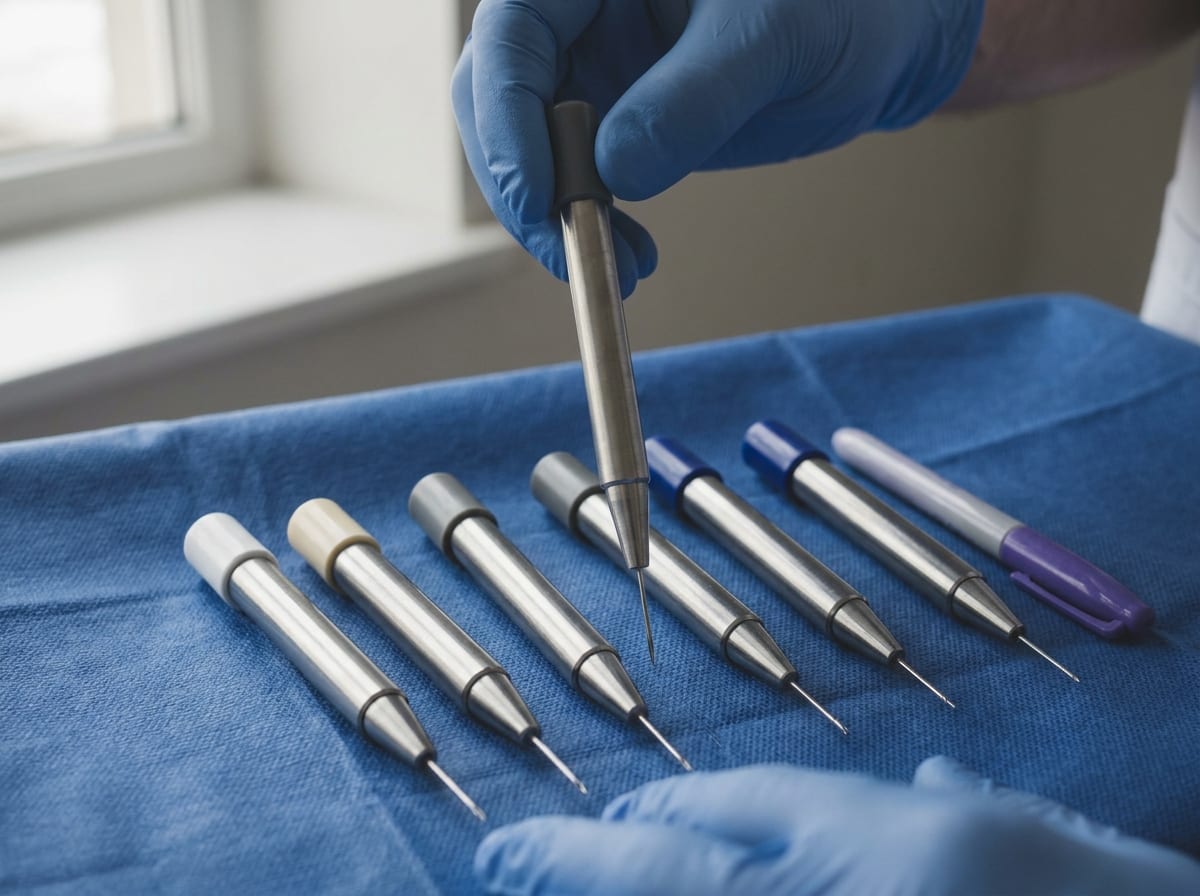
When patients start comparing hair transplant options in Turkey, one question keeps coming up: FUE or DHI? The techniques are genuinely different in how grafts reach the scalp — and the answer matters most when the goal is hairline precision or restoring density in a tight area where existing hair remains.
At CFH, DHI using the Choi implanter pen is performed by Dr. S. Kaya, the same surgeon who draws the hairline, extracts the follicles, and reviews your density at twelve months. The technique and the continuity are inseparable.
What DHI with the Choi Implanter Actually Does
In a standard FUE procedure, extracted grafts are placed into pre-made recipient slits. In DHI, the Choi implanter pen combines the opening and the placement into a single step — the graft loads directly into the pen and is implanted without a separate incision phase.
In practical terms this means:
- Depth and angle are controlled at the point of placement. The surgeon sets the direction of each follicle as it enters the scalp, which matters significantly when reconstructing a natural hairline.
- The time grafts spend outside the body is reduced. Extracted follicles move from harvest to implantation faster, which is relevant for graft handling.
- Existing hair is easier to preserve. Because no pre-made slits are opened across the recipient zone, DHI works well in areas where some hair remains and the goal is to increase density rather than populate a bald field.
What DHI does not change: the quality of extraction, the accuracy of the donor zone harvest, and the care the follicle receives before it is loaded into the pen. Those are surgeon and team variables, not technique variables.
Who DHI Suits Best
DHI is not automatically superior to Sapphire FUE — and a consultation that tells you otherwise before seeing your scalp is one to be cautious about. The better question is which technique suits your specific case.
DHI tends to be the more appropriate choice when:
- Hairline reconstruction is the primary goal and single-hair placement precision at the frontal line is critical
- You are adding density to an area that still has hair — in this context DHI's ability to work between existing follicles without pre-opening channels across the zone is a real advantage
- The graft count required fits within the DHI workflow — high-volume mega-sessions are generally better served by FUE, while DHI is well matched to focused density and hairline work
DHI is typically not the first choice when:
- Very large graft counts are needed in a fully bald area
- The case calls for multi-region work where session length is already long
Dr. Kaya signs the technique recommendation in the written plan before any procedure is booked. If the case warrants FUE, you will be told why.
How CFH Plans a DHI Session
The hairline is designed three times before a follicle is touched. That is not a phrase — it describes how the planning session works.
First pass: the frontal line is marked at rest, in natural light, accounting for the brow height and the proportion of the face as it currently sits. Second pass: the same line is reviewed with the patient looking at photographs from five years and ten years ago, and adjusted for where density is heading, not just where it is. Third pass: Dr. Kaya signs the hairline and the graft distribution plan in writing.
The procedure then follows that signed plan. The session runs 8–12 hours under local anaesthesia with sedation. The donor zone is at the occiput and sides; extraction is methodical and spread to avoid visible thinning at the back. Grafts are loaded into the Choi pens and implanted in the sequence the plan dictates, angle by angle.
Recovery: What to Expect, Month by Month
Hair transplant recovery has two phases that patients often conflate. Understanding both reduces anxiety considerably.
The visible phase (first 7–14 days)
The scalp will be pink, there will be some swelling, and the implanted hairs will have small crusts around each graft site. This is expected and resolves. Most patients who have had their procedure on a Monday are comfortable appearing in public by the following week.
The shedding phase (weeks 3–8)
The implanted hairs shed. This is not a sign of failure — it is a normal part of the follicular cycle. The follicle remains alive in the scalp; the hair shaft is shed and will regrow. Patients who are not told about this phase in advance find it distressing. We tell every patient about it on day one.
The growth phase (months 3–12)
New hair begins emerging around month three, but it will be fine and soft at first. Density builds progressively through months four to eight. The final result — the density and texture the transplant was planned to achieve — is assessed at the twelve-month video review with Dr. Kaya.
There is no shortcut through this calendar. Density at month three is not density at month twelve, and patients who compare early photos to outcome photos from other clinics are not comparing equivalent time points.
The CFH Surgeon-Led Commitment
Hair transplant Turkey searches surface a large number of clinics. The variable that matters most — and is hardest to verify in advance — is who actually performs the procedure.
At CFH, the answer is stated and held to:
- The surgeon who hears your intake is the surgeon who designs the hairline
- The surgeon who designs the hairline performs the extraction and oversees implantation
- The same surgeon reviews density at months three, six, and twelve
Coordination across the full journey is built into the process. Visa letter, airport transfer, recovery hotel for five nights, and the post-procedure coordinator who stays available for questions between scheduled reviews. Eight intake languages, including Arabic and Farsi.
The facility is BHT Clinic, Istanbul — JCI-accredited since 2009 and TEMOS-certified for international patient care. Bahat Medical Group has been in continuous practice since 1994.
Frequently Asked Questions
Is DHI better than FUE for hair transplants in Turkey?
Neither technique is categorically better. DHI (Choi implanter) offers more precise angle control at implantation and is well suited to hairline work and adding density where hair remains. FUE is often the better choice for high-volume sessions in fully bald areas. The right technique for your case depends on your scalp assessment, graft count, and goals — which is why a signed plan before any procedure is the only honest starting point.
How many grafts can be transplanted in a DHI session?
DHI sessions are typically planned in the range that the Choi implanter workflow can handle without compromising graft quality. For cases requiring very large graft counts in a single session, Sapphire FUE is often more practical. Dr. Kaya will specify the count and rationale in your written plan.
Will I need to shave my head for DHI?
Full shaving of the recipient zone is not always required with DHI — this is one reason patients with longer hair sometimes prefer the technique, as it can allow more of the existing hair to remain in place during recovery. Whether shaving is required depends on your specific case and is confirmed during planning.
What is the recovery time after a DHI hair transplant in Turkey?
The visible recovery period — redness, crusting, and swelling — is approximately 7–10 days. The implanted hairs shed in weeks three to eight, which is normal. Full density from the transplant is typically visible and assessed at the twelve-month review.
Does the same surgeon perform the whole procedure?
Yes. Dr. Kaya designs the hairline, oversees extraction, and directs implantation. The twelve-month review is also with Dr. Kaya. We do not delegate the procedure to a technician team under a surgeon's name.
What is the cost of DHI hair transplant in Turkey at CFH?
The CFH band for DHI Choi implanter is €3,200 – €5,400 depending on graft count and session complexity. This includes the five-night recovery hotel and the twelve-month follow-up review. A written quote is part of your signed plan — there is no fee to receive it.
How do I get started?
An intake call in your language — no consultation fee, no commitment. Send your photographs and history; Dr. Kaya reviews and signs a written plan within 48 hours. Eight languages at intake: English, Romanian, Italian, Spanish, French, Albanian, Arabic, and Farsi.