Lip Lift
Surgeon-led lip lift at CFH Istanbul. Subnasal incision, conservative shortening planned by one named surgeon — intake to twelve-month review. JCI + TEMOS accredited. No-fee written plan in 48 hours.
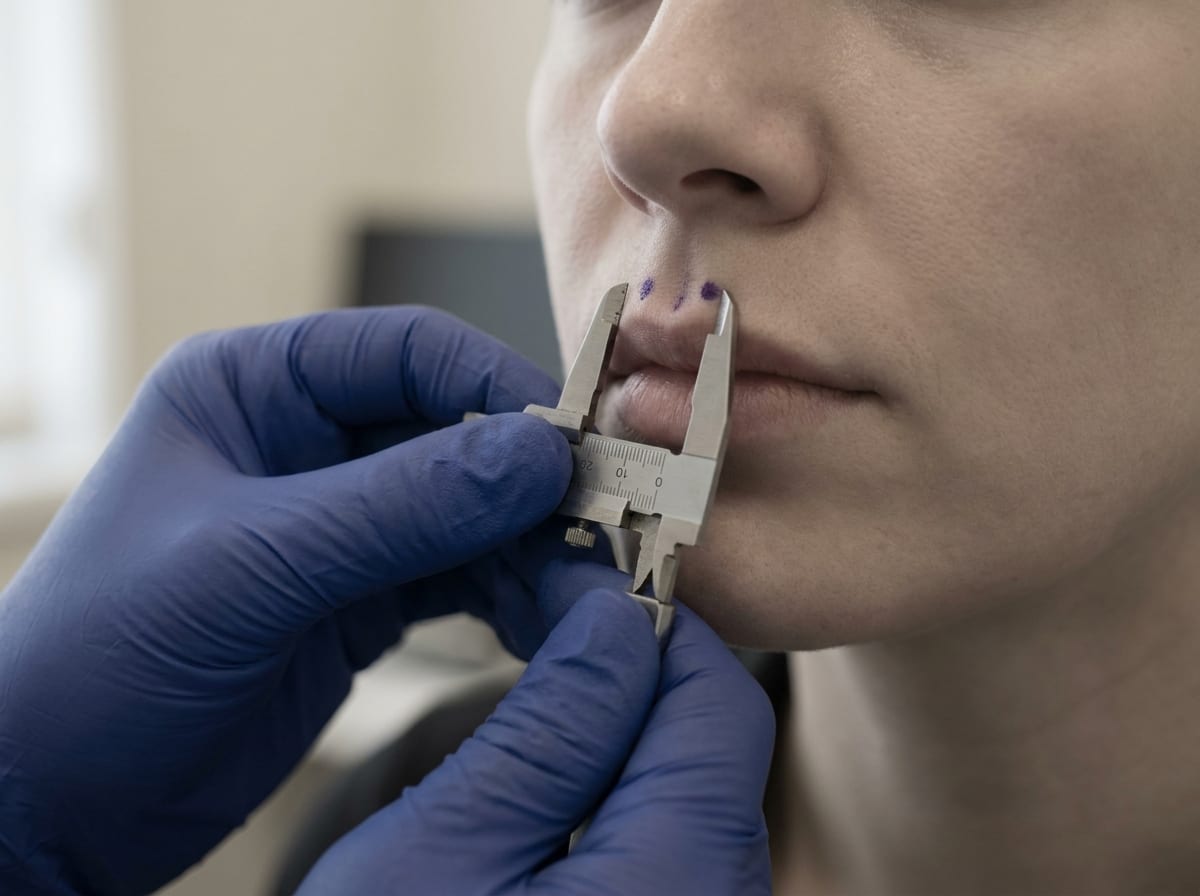
The distance between the base of the nose and the upper lip edge is called the philtrum. For some people that distance lengthens gradually with age. For others it has always sat slightly longer than feels proportional. Either way, when the upper lip starts to lose its visibility — when the vermilion border rolls slightly inward or the lip appears to lengthen rather than volumise — the issue is structural, not one that fillers reliably solve.
A lip lift addresses this structurally. A small, carefully placed incision at the base of the nose shortens the philtrum length and allows the upper lip to roll upward, increasing the visible lip show without adding volume. The result, when well planned, is a more proportioned mid-face — not a different shape, but the same face with better balance at quiet repose.
At CFH, the surgeon who assesses your philtrum proportions in the intake consultation is the surgeon who designs the excision, performs the procedure, and reviews healing at three, six, and twelve months. That continuity is how we are organised — one surgeon, one plan, one point of responsibility throughout.
What the procedure involves
The standard approach at CFH is a subnasal lip lift — sometimes called a bullhorn lip lift after the curved shape the incision traces at the nostril base — a technique in which the incision follows the natural contour where the skin meets the base of the columella and the nostril sills. The scar falls in the shadow of the nose, within the natural skin transition, rather than sitting on the upper lip surface.
The amount of skin removed is calculated precisely and conservatively. The surgeon measures the philtrum length from multiple reference points at quiet repose — not at smile, not exaggerated. The excision is designed to address the distance that has been identified as the structural problem, without overcorrecting.
The procedure is performed under local anaesthesia, typically taking between one and one and a half hours. No general anaesthetic is required. Patients are awake and comfortable throughout.
Sutures are placed in two layers — deep dissolvable sutures to hold the structural result and surface sutures along the incision line, which are removed at the one-week review.
Who is a good candidate
Lip lift works well when the issue is philtrum length rather than volume loss alone. Patients who tend to benefit most have:
- A philtrum that sits at the longer end of the proportional range — typically above 13–15 mm at rest, though the surgeon assesses proportion relative to the full face rather than against a fixed number
- An upper lip that has lost its natural eversion, so the vermilion border is less visible than it once was
- Realistic expectation of refinement rather than a categorical change in appearance — the procedure shortens the philtrum and increases lip show; it does not change lip shape or add volume
- A stable, healthy baseline — no active dental work that would require significant opening of the mouth during healing
If volume loss is the primary concern alongside philtrum length, the surgeon will discuss whether a lip lift alone addresses the goal, or whether a combined approach makes more sense for your anatomy. That conversation happens at the planning stage, before any commitment is made.
A lip lift is also sometimes planned in combination with rhinoplasty, where the nose and upper lip are considered together as a unit of mid-face proportion. The CFH face team plans combined procedures as a single surgical logic — the relationship between elements is considered explicitly, not treated as two procedures stacked together.
Recovery in plain terms
The first week involves localised swelling at and just above the upper lip. This is expected and resolves progressively. Most patients find the visible swelling is substantially gone by day seven, at which point surface sutures are removed.
Brushing teeth and eating normally are possible throughout — the procedure does not immobilise the mouth. Patients are asked to avoid wide mouth opening and strenuous lip movement during the first week, and to sleep with the head slightly elevated.
The scar at the subnasal crease initially appears as a fine red or pink line. Over six months it fades and settles into the natural skin shadow at the base of the nose. The twelve-month review — conducted by video with the same surgeon — is the point at which the final result, including scar maturation, is assessed.
The full six-month settle is the honest timeline for the outcome that the surgeon discussed with you at intake. Earlier reviews at three months address any questions about healing progress.
Operative details at CFH:
- Duration: 1–1.5 hours
- Anaesthesia: local
- Recovery hotel: 3 nights
- Visible recovery: approximately 7 days
- Full settle: 6 months
- Price band: €2,400 – €3,800
What could be different from what you expect
A lip lift is a precise procedure with a small margin of technical tolerance. The result is largely set at the planning stage — the amount removed, the placement of the incision, the tension on the closure. This is why the surgeon who designs the plan is also the surgeon who performs it, and why the measurement is taken at quiet repose rather than at a posed angle.
Over-resection — removing slightly more than the anatomy comfortably accommodates — is the central risk in any lip lift. The CFH approach is conservative by design. The surgeon will not propose an amount of shortening that requires the lip to sit under structural tension at rest. If your goal requires more shortening than is anatomically appropriate, the surgeon will say so at the planning stage rather than proceed with an overcorrection that affects how the lip sits at rest.
Scar outcome at the subnasal crease depends on skin type, sun exposure during healing, and individual healing variability. For most patients with the incision placed correctly in the skin transition zone, the scar is not visible in normal interaction. The surgeon will discuss realistic scar expectation for your specific skin at the planning stage.
The lip lift does not address smile appearance, dental show, or lip volume. If those are part of your goal, they need to be discussed as separate or combined elements in the plan.
How CFH plans a lip lift
The intake is a 30-minute call in your language. You describe what you have noticed — whether that is a philtrum that has lengthened, a lip border that has become less visible, or an ongoing comparison between photographs taken at different ages. No surgical menu is presented at this stage. The surgeon listens for intention, then looks at your photographs.
Within 48 hours, the matched surgeon signs a written plan. That plan specifies the proposed approach and what it is designed to achieve for your specific anatomy, what it does not address, and how healing is expected to progress at each stage. The plan is yours to read, question, and take a second opinion on before committing.
On procedure day, the surgeon who designed your plan is the surgeon at the table. The coordinator who managed your travel, pre-operative assessment, and recovery hotel is in the building throughout procedure day.
Following discharge, the structured review schedule — at three months, six months, and twelve months by video — runs with the same surgeon. Questions between reviews go to the coordinator, who arranges surgeon contact when needed.
CFH has been in continuous practice since 1994. The facility — BHT Clinic, Istanbul — holds JCI accreditation facility-wide and TEMOS certification for international patient care. Intake is available in eight languages: English, Romanian, Italian, Spanish, French, Albanian, Arabic, and Farsi.
Frequently asked questions
What is a lip lift and how is it different from lip fillers?
A lip lift is a surgical procedure that shortens the distance between the base of the nose and the upper lip edge (the philtrum), allowing the upper lip to sit higher and show more of the vermilion border. Fillers add volume — they do not change the philtrum length or the structural position of the lip. For patients whose primary concern is a lengthening philtrum or a lip that has lost its visible edge rather than its volume, a lip lift addresses the structural cause. Fillers in this anatomy often produce a result that looks heavy rather than lifted.
Is local anaesthesia sufficient for a lip lift?
Yes. A lip lift is performed comfortably under local anaesthetic at CFH. There is no requirement for general anaesthesia, which means no fasting protocol, no intubation, and a faster return to alertness after the procedure. You are awake throughout and can communicate with the surgeon if needed.
How visible is the scar?
The incision is placed in the natural skin transition at the base of the nose — where the skin texture changes at the columella and nostril sill. In this position, the healed scar sits in the shadow of the nose and is not visible in normal face-to-face interaction. Scar maturation takes six months. Sun protection on the area during healing is important for the final result.
Can a lip lift be combined with rhinoplasty?
Yes, and it is a common combination. The nose and upper lip are structural neighbours — changes to the nose tip projection affect how the philtrum reads, and vice versa. When both are planned, CFH considers the relationship between them as a single unit of mid-face proportion. The combined plan is built by the surgeon who will perform both, so the relationship between elements is set before the operating table, not adjusted during.
How much does a lip lift cost in Istanbul at CFH?
The price band at CFH is €2,400 – €3,800, which covers the procedure, local anaesthesia, the three recovery hotel nights, and the post-operative review schedule to twelve months. The written plan specifies exactly what is included before any commitment is made. There is no consultation fee.
What is a scarless lip lift — is that an option?
The phrase 'scarless lip lift' typically refers to techniques that place the incision inside the mouth or along the lip border rather than at the base of the nose. These approaches avoid the subnasal position but involve different trade-offs in terms of what they can achieve and how the scar heals in the mucosal environment. CFH uses the subnasal approach because, placed correctly, it produces a well-hidden scar with reliable structural outcome. If you have specific concerns about scar placement, the planning consultation is the place to discuss which approach suits your anatomy and expectations.
Will the result look natural — not 'done'?
The standard the surgeon works to is proportion at quiet repose. The measurement is taken when the face is at rest — not at smile, not at exaggerated angle. The amount of shortening proposed is what the anatomy comfortably accommodates, set conservatively. The goal is a mid-face that reads as proportioned, not a lip that signals a procedure. Whether that matches what you are looking for is a conversation that happens in the planning stage, with photographs, before any decision is made.
Will I see the same surgeon at every stage?
Yes. The surgeon who hears your intake, designs your plan, performs the procedure, and conducts the three-month, six-month, and twelve-month reviews is the same person. CFH does not delegate post-operative reviews to a different clinician or operate a model where the named surgeon hands the case to a junior. This is the only model we operate.