Upper Blepharoplasty
Upper blepharoplasty at CFH Istanbul. Hooded eyelid correction under local anaesthesia and sedation, performed and reviewed by the same named surgeon — intake to twelve-month follow-up. JCI-accredited facility.
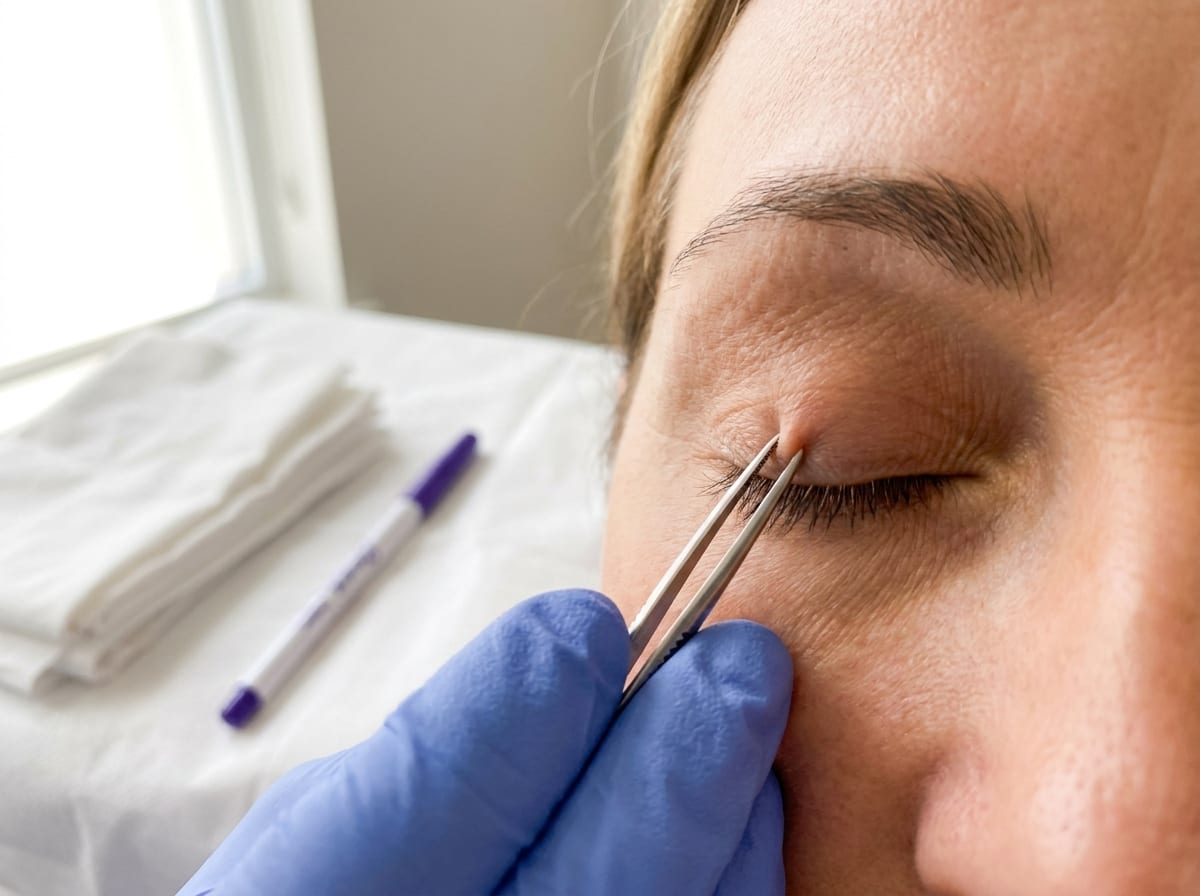
Upper blepharoplasty is the surgical correction of excess skin on the upper eyelid — the tissue that folds down and narrows the visible eye. It is one of the most precisely localised procedures in facial surgery: the target zone is measured in millimetres, and the result lives in full view of every person you meet.
The procedure is also called upper eyelid surgery, hooded eyelid surgery, or an eyelid lift. Whatever name a patient uses when they search, the anatomy is the same: skin that has descended over the lid margin, sometimes accompanied by a small amount of herniated fat. The goal is to restore a clean upper lid crease and reopen the eye.
Who is a candidate for upper eyelid surgery?
Candidacy for upper blepharoplasty is determined in consultation, not from photographs alone. The broad criteria:
- Excess upper lid skin that rests on or near the lash line, narrowing the eye or obstructing peripheral vision
- Stable overall eyelid anatomy — no pre-existing ptosis (drooped levator muscle) that would require a separate correction
- Realistic expectations about what eyelid surgery addresses versus what it does not
- No active systemic conditions that increase anaesthetic risk
A brow position assessment is standard at CFH. The upper lid and the brow operate as a unit, and surgery on one without accounting for the other can produce a result that settles awkwardly. If the brow sits below its natural position, a brow lift conversation happens before any plan is signed.
The procedure at CFH — what to expect
Upper blepharoplasty at CFH is performed under local anaesthesia with sedation. General anaesthesia is not required, which simplifies recovery and reduces systemic risk for the majority of candidates.
Duration: 1 to 1.5 hours.
Anaesthesia: Local with sedation. The field is numbed; the patient is relaxed but breathing independently.
What is done: The surgeon marks the planned excision zone on the lid in the pre-operative consultation, not in the theatre for the first time. Excess skin — and fat where indicated — is removed through an incision that follows the natural upper lid crease. The incision heals within the crease line and becomes difficult to see once settled.
The same surgeon operates: At CFH, the surgeon who assessed your eyes, reviewed your photographs, and signed your written plan is the surgeon who performs the procedure. There is no delegation to a trainee or a junior under a senior name. This is the operational model, not a marketing phrase.
Recovery from upper blepharoplasty — honest framing
Recovery from upper eyelid surgery follows a predictable arc, though the rate of swelling and bruising varies between patients.
The first week: Bruising and swelling are normal and expected. Most patients look visibly post-operative for 7 days. This is the period when you would not want to attend a work meeting or a social event. Cold compresses, head elevation, and keeping the area clean are the practical tasks of the first week.
After 7 days: The visible markers of surgery — the bruising — are largely resolved for most patients. The sutures are removed, typically at the day 7 review. Some residual swelling remains but is mild enough that most patients are socially presentable.
Six months to settle: The result at week 2 is not the result at month 6. Upper lid surgery settles progressively. The scar softens, residual swelling fully resolves, and the crease finds its resting position. Patience at six weeks — when things can look temporarily tight — is part of the process. The surgeon reviews this arc with you, not once but across multiple scheduled calls.
Why surgeon continuity matters specifically for eyelid surgery
The upper eyelid is one of the most scrutinised zones of the human face. A result that is 1 mm asymmetric between sides is noticeable to the patient in every mirror. A lid that settles with the crease line placed slightly too high or too low registers in every photograph.
This is why the identity of the surgeon — and their continued involvement — matters more for eyelid surgery than for procedures where the visual result is less exposed and less detailed.
At many clinics, the business model separates the consultant from the operating surgeon. The senior surgeon who assessed you may not be available on the day of your procedure, and a junior may step in. The first review may be with a nurse rather than the operating surgeon.
At CFH, the same surgeon who signs the pre-operative plan is the surgeon in the theatre, at the day-7 suture removal, and at the six-month video review. Dr. M. Aydın leads CFH's face and body work. His stated principle: "If I will not see you at the four-month review, I should not be the surgeon at month zero."
This is a structural commitment, not a preference — it is built into how cases are planned and scheduled.
Upper blepharoplasty abroad — what changes, what stays the same
Having upper eyelid surgery in Istanbul rather than in your home country does not change the anatomy or the recovery. What it changes is the logistical context.
The clinical facts are identical: the same procedure, the same local anaesthesia with sedation, the same 1 to 1.5 hour operative time, the same 7-day visible recovery, the same six-month settling arc. The surgical standard you should expect — and should ask to verify — is JCI accreditation at the facility level. BHT Clinic, where CFH operates, holds JCI accreditation facility-wide and TEMOS certification for international patient care.
What changes logistically:
- You need 5 nights in Istanbul to cover the pre-op day, procedure day, and the 7-day review before you fly home
- Your intake, written plan, and after-care instructions are available in your language — CFH operates in 8 languages at intake (EN, RO, IT, ES, FR, AL, AR, FA)
- The coordinator who arranged your travel is the coordinator you can reach after you return home
- Your 12-month video reviews happen remotely, from wherever you are
The practical anxiety for most international patients is not the surgery. It is being 2,000 kilometres from someone who knows their name if something needs explaining. CFH's answer is operational: the same named surgeon and the same coordinator own your case across the full twelve months.
The CFH approach to upper blepharoplasty
CFH is a surgeon-led aesthetics practice within BHT Clinic, Istanbul — a facility in continuous operation since 1994. It is not an independent clinic with a single operating room; it is an aesthetics division within a JCI-accredited hospital, which means that full hospital infrastructure — on-site imaging, 24/7 anaesthesia cover, emergency cover — is present even for a procedure as contained as upper blepharoplasty.
The approach to eyelid surgery at CFH:
Brow assessment is standard. No upper lid plan is signed without accounting for brow position. If the brow is the primary driver of apparent lid descent, that conversation happens before the plan.
The incision is marked pre-operatively. The excision zone is planned and discussed in the consultation, not improvised in the theatre.
The plan is written and signed. Once your photographs and history are reviewed, your surgeon signs a written plan in your language within 48 hours. There is no fee for this. You receive the same document.
Recovery follow-up is structured, not ad hoc. The day-7 review is with the operating surgeon. Video reviews are scheduled at month 3 and month 6. Nothing is left to chance or to your initiative.
Frequently asked questions — upper blepharoplasty
Will the same surgeon who assessed me actually perform the operation?
Yes. At CFH, the surgeon who hears your intake, reviews your photographs, and signs the written plan is the surgeon at the operating table. Named, confirmed in advance, no substitution. This applies to Dr. M. Aydın for face cases.
Is upper blepharoplasty painful?
The procedure is performed under local anaesthesia with sedation. The field is numbed before any incision; you will not feel the operative work. Post-operatively, discomfort is typically mild — a tightness and sensitivity around the lids for the first few days. Most patients describe it as manageable without strong analgesics beyond the first 48 hours.
What does recovery actually look like, day by day?
Days 1–3 are the most swollen and bruised. Cold compresses help. Days 4–7 the bruising begins to yellow and fade. By day 7, most patients are presentable for ordinary social contact, though makeup over the incision area is not advisable until week 2. The lid crease looks tight for several weeks before softening. The settled result comes at six months.
Can upper and lower blepharoplasty be done together?
Yes, and they often are. Upper and lower eyelid surgery can be performed in the same operative session. Whether this is appropriate for a given patient depends on the assessment — some patients need upper work only; some need both. The planning conversation covers this.
Is a brow lift sometimes needed instead of, or alongside, upper lid surgery?
Sometimes. If brow ptosis is the dominant cause of the hooded appearance, operating on the lid alone may give an incomplete result. At CFH, brow position is assessed as part of every upper blepharoplasty consultation. If a brow lift is the right answer, or the right addition, that is what the surgeon will recommend — not the procedure the patient arrived asking for.
How is the scar managed?
The incision is placed inside the natural upper lid crease. Once healed, it is typically not visible with the eye open and difficult to see with the eye closed. The scar matures and softens over the six-month settling period. Sun protection on the lid area during the first year accelerates scar maturation.
What is the consultation process if I am travelling from abroad?
The consultation begins remotely. You submit photographs following a protocol we send you, along with a brief medical history. Your matched surgeon — Dr. M. Aydın for upper blepharoplasty — reviews these and signs a written plan in your language within 48 hours. There is no fee and no obligation. If you decide to proceed, we arrange the travel, accommodation, and pre-operative logistics. You arrive for the procedure day with the plan already signed and the recovery schedule already mapped.
Begin a consultation
One surgeon, from the first conversation to the twelve-month review. Tell us what you are considering — we will tell you honestly what is possible.