Structural Rhinoplasty
Structural rhinoplasty at CFH, Istanbul. One surgeon from intake to twelve-month review. JCI-accredited facility. Written plan in your language before you confirm.
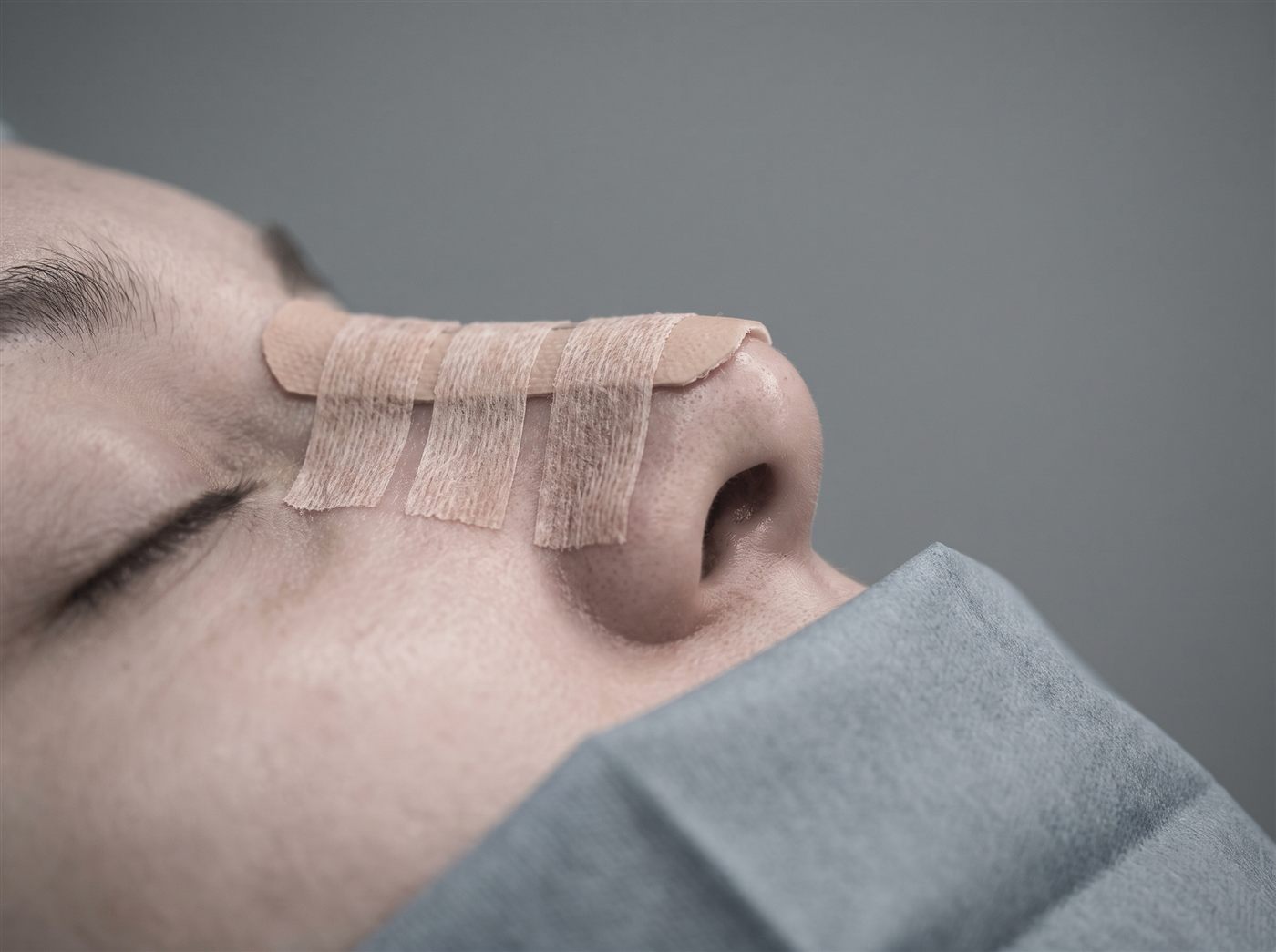
CFH performs structural rhinoplasty at BHT Clinic, Istanbul. Every case begins with the same surgeon who signs the operative plan and every case ends with the same surgeon at the twelve-month review. That continuity is the product — not just a promise written on a brochure.
What "structural rhinoplasty" means at CFH
The phrase signals a particular set of priorities. The nose that results from a well-executed rhinoplasty should look as though it was always there: proportional to the forehead, to the chin, to the profile as a whole. Function is part of the same equation — airway, septum, and structure are assessed alongside aesthetics in every plan, not as a separate consultation.
Dr. E. Demir leads rhinoplasty at CFH. His approach is consistent across cases: proportion matters more than drama, and function is assessed alongside aesthetics in every plan, not as an afterthought.
Who tends to request rhinoplasty at CFH
Patients arrive with a wide range of concerns. The most common presentations our surgeons work through:
- Dorsal hump — the ridge visible in profile, which may be cartilaginous, bony, or both
- Bulbous or wide tip — tip refinement is among the most technically demanding parts of rhinoplasty, and among the most common requests
- Aquiline profile — a hooked or projected tip, often combined with a lower-bridge correction
- Deviated or crooked nose — frequently accompanied by a deviated septum affecting airflow
- Ethnic rhinoplasty — cases where the goal is refinement within facial character, not a standard template; the plan is written to the individual anatomy
- Revision rhinoplasty — patients who have had prior surgery elsewhere and are seeking correction; revision cases are evaluated carefully; the surgeon reviews the original notes and imaging before a plan is signed
Candidacy is always assessed in the context of the whole face. A rhinoplasty that works in isolation but creates imbalance with the chin or forehead is not a successful result. Where indicated, Dr. Demir may note chin projection alongside the rhinoplasty plan — patients are never pushed toward additional procedures, but the assessment covers the full picture.
Open rhinoplasty versus closed rhinoplasty
Both techniques are in use at CFH. The choice is determined by what the anatomy requires, not by a default preference.
Closed rhinoplasty (endonasal) keeps all incisions inside the nostrils. There is no external scar. It is suited to cases where access to deep structures is not required — often tip refinements and moderate hump reductions.
Open rhinoplasty adds a small incision across the columella (the tissue between the nostrils). The incision heals to near-invisibility in most cases and it gives the surgeon direct visibility of the entire nasal framework. Open technique is generally preferred where structural changes are significant, or where a deviated septum needs correction under direct sight.
Your surgeon will state which approach is planned and why. That rationale is in the written plan you receive before you confirm the procedure.
What the surgery involves
- Anaesthesia: General
- Duration: 3–4 hours
- Recovery hotel: 7 nights in Istanbul following the procedure
- Splint: Worn for the first 7 days; removed by the surgeon at a post-operative review before you travel home
- Swelling settle period: Up to 12 months for final definition
The surgery takes place in a JCI-accredited theatre at BHT Clinic. The facility holds Joint Commission International accreditation — a facility-wide standard covering anaesthesia safety, infection control, surgical protocols, and patient identification from admission to discharge. On-site ICU and 24/7 anaesthesia cover are part of the standard BHT Clinic setup, not an arrangement made specifically for international patients.
Recovery: a realistic timeline
Recovery is one of the most-searched aspects of rhinoplasty for good reason. The honest picture:
Days 1–7 (in Istanbul): Swelling and bruising are expected, concentrated around the eyes and nose bridge. The splint protects the operative work. Movement is limited but most patients are comfortable walking to meals within a day or two. The coordinator contacts you every 48 hours during this period.
Day 7: Splint removal. Your surgeon reviews the nose, photographs the result for the case file, and clears you to fly home. Recovery-hotel checkout follows. Your next scheduled contact is the video review at month three.
Weeks 2–6: The visible bruising resolves. Swelling reduces noticeably but remains. Patients are generally back to office work within 10–14 days; physical exertion is restricted for six weeks.
Months 3–6: The nose continues to settle. Month-three video review with your surgeon covers swelling progression and any questions that have accumulated since discharge. Month-six review checks that the settling is proceeding as planned.
Month 12: The twelve-month review is the close-out point. The surgeon assesses the final result. A close-out note is prepared and sent to your GP. The case file stays with CFH; the coordinator remains reachable if anything comes up after that.
The tip is typically the last area to reach its final form — it often looks broader at month three than it will at month twelve. We tell patients this before surgery, not after.
What could be different from your expectations
Rhinoplasty is among the most technically complex aesthetic procedures. It is useful to have an honest account of where outcomes can diverge from what a patient pictures:
Settling is not linear. The nose at week two looks different from month three and different again at month twelve. The process can feel slow, and individual weeks may appear to regress before progressing. The review schedule exists precisely to walk through this with your surgeon.
Tip refinement is inherently approximate. Cartilage has memory and responds to healing in ways that cannot be fully predicted at the time of surgery. A planned degree of tip refinement may land slightly more or less than the pre-operative sketch. Surgeons work within ranges, not to the millimetre.
Revision is sometimes part of the path. A small proportion of rhinoplasties — even well-executed ones — benefit from minor secondary work at twelve months or later. This is not a failure of the original procedure; it is how rhinoplasty, more than most aesthetic surgeries, sometimes behaves. We discuss this frankly in the pre-operative plan, not as a sales conversation but because patients deserve the honest account.
Scar at the columella (open technique). The columella incision heals to near-invisibility in the majority of open rhinoplasty cases but it is a real scar and it is visible up close in the early months. Your surgeon will show you what to expect.
Choosing your surgeon for rhinoplasty
The most common question patients ask — often phrased as "best rhinoplasty surgeon in Turkey" — is really asking something more specific: how do I know the person planning my nose is the person performing it, and that they will still be accountable at month twelve?
At CFH the answer is structural, not promotional. The model has one surgeon per case, named before you confirm. Dr. Demir handles rhinoplasty at CFH. If your assessment leads to a plan he signs, he is the surgeon at the operating table. The coordinator who manages your journey does not substitute for him at any clinical review.
The written plan you receive before confirming the procedure includes the technique rationale, the specific changes intended, the recovery timeline, and the follow-up schedule. It is in your language. There is no fee for the plan and no obligation attached to receiving it.
Rhinoplasty in Istanbul: the international patient journey
Most patients requesting rhinoplasty at CFH travel from the UK, mainland Europe, and beyond. The journey follows a consistent arc:
Before you arrive: A 30-minute intake call in your language. Photographs sent the same day. The surgeon reviews those photographs; the plan is signed and returned within 48 hours. Travel, visa invitation letter if needed, and recovery hotel are co-ordinated by CFH.
In Istanbul: Airport transfer, pre-op bloods at the recovery hotel (no clinic visit required the evening of arrival), surgery the following morning, seven nights in the recovery hotel under coordinator oversight, splint removal and discharge review on day seven.
After you go home: Video reviews at months three, six, and twelve. Coordinator on-call throughout. Close-out note to your GP at month twelve.
CFH operates in eight intake languages — English, Romanian, Italian, Spanish, French, Albanian, Arabic, and Farsi — because an international patient deserves to receive their surgical plan in their own language, not a translation summary.
Frequently asked questions
How much does rhinoplasty in Turkey cost?
The plan you receive from CFH covers all clinical fees for the procedure, the seven-night recovery hotel, airport transfers, and all follow-up reviews through month twelve. The cost is established in writing before you confirm. We do not publish a headline figure because rhinoplasty cases differ substantially in scope — a tip refinement is a different plan from a structural correction with septoplasty — and a quoted number without a surgeon-reviewed plan tells you nothing meaningful about what your case costs. Request the plan first; the number follows from the scope.
What is the recovery time for rhinoplasty?
Most patients need seven days in Istanbul before the splint comes off and they are cleared to fly home. Return to office work is typically 10–14 days from surgery. Strenuous exercise is restricted for six weeks. Full settle — including tip definition — takes up to twelve months.
What is the difference between open and closed rhinoplasty?
Closed (endonasal) rhinoplasty keeps all incisions inside the nostrils; there is no external scar. Open rhinoplasty adds a small incision across the columella to give direct access to the nasal framework. Your surgeon determines which is appropriate for your anatomy and states this in the signed plan.
Will I see the same surgeon throughout?
Yes. The surgeon who reviews your photographs and signs the plan is the surgeon at the operating table, at the splint-removal review, and at the twelve-month video close-out. This is the only model we operate.
Can I combine rhinoplasty with another procedure?
Chin projection is sometimes assessed alongside rhinoplasty where facial balance warrants it. Other combinations are evaluated case by case. Your surgeon notes any relevant considerations in the plan; no additional procedure is added without a separate conversation and your explicit agreement.
Is the facility accredited?
BHT Clinic holds JCI (Joint Commission International) accreditation facility-wide, and TEMOS certification for international patient care. Both are independently audited. JCI covers anaesthesia, infection control, surgical safety checklists, patient identification, and discharge protocols. TEMOS covers the end-to-end experience for patients travelling from abroad.
What if I need support after I return home?
Your coordinator is on call for the twelve-month follow-up period. Scheduled video reviews are at months three, six, and twelve. If you have a question between scheduled reviews — or if something needs the surgeon's eye — you contact the coordinator and they arrange the call, typically within 24 hours.
Begin a consultation
One surgeon, from the first conversation to the twelve-month review. Tell us what you are considering — we will tell you honestly what is possible.